
Last updated September 10, 2026
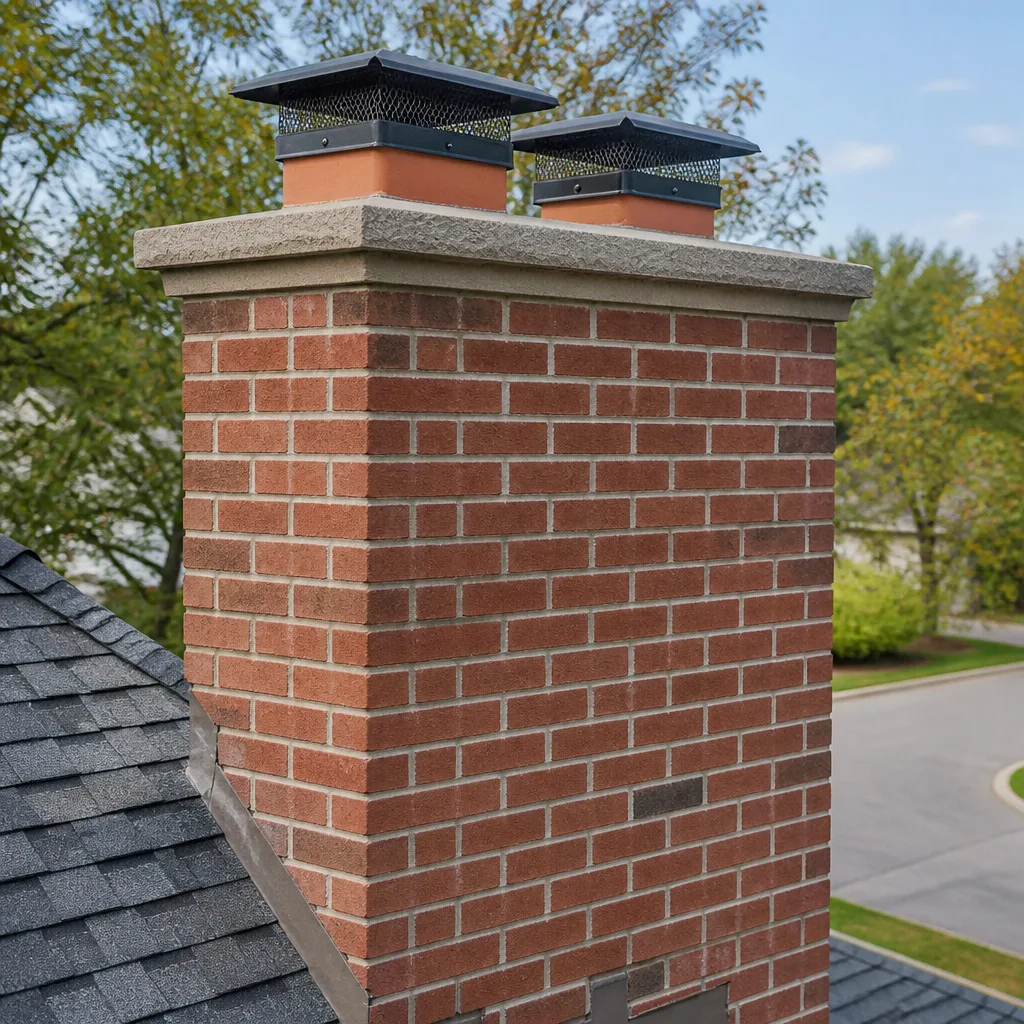
Level 1 sweep and inspection to the NFPA 211 annual standard - flue, crown, cap, and flashing checked and photographed
Chimney sweep logs do not sweep chimneys. They loosen some creosote - which then falls where a brush and vacuum still have to collect it.



 Before
 After
After Before
 After
After Before
 After
AfterThe Complete Guide to Chimney Cleaning in Fredericksburg
The National Fire Protection Association reports that 30% of chimney fires in residential homes involve chimneys that were “recently cleaned.” A dirty chimney isn’t the only risk. The wrong cleaning at the wrong time can dislodge deteriorating liner tiles and create a hazard that didn’t exist before the sweep arrived. In Fredericksburg, where clay soil holds moisture and humidity swings from 40% in January to 80% in July, creosote behaves differently than it does in drier western counties. This guide and our more guides & resources map the full sequence of decisions - fuel type, liner condition, seasonal timing, and who holds the brush - so you can make each choice on facts, not fear.
Quick Answer
Professional chimney cleaning in Fredericksburg typically costs $150-$350 for a standard wood-burning fireplace sweep with Level 1 inspection, and should include a written report with photos of the flue interior. Most homeowners with active wood-burning fireplaces need this service annually before the burning season begins, though Fredericksburg’s humid climate and frequent temperature inversions can accelerate creosote buildup in older masonry chimneys, making twice-yearly sweeps prudent for heavy users. See our Seasonal Chimney Cleaning Care for Fredericksburg: Year-Round Homeowner’s Guide for timing strategies.
Table of Contents
- How Fredericksburg’s Climate Changes What “Clean” Means
- Level 1, 2, and 3 Inspections: When Each Is Required
- Why Fuel Type Dictates Your Cleaning Approach
- What Actually Happens During a Professional Chimney Cleaning
- Reading Your Firebox: What the Ash Tells You
- The Written Report: What Legitimate Documentation Looks Like
- Timing and Cost in the Fredericksburg Market
- Choosing a Sweep: What Separates Craftsmen from Chains
How Fredericksburg’s Climate Changes What “Clean” Means
Fredericksburg sits on the Coastal Plain where clay-heavy soil traps moisture against foundation masonry and summer humidity rarely drops below 60%. This matters for chimney cleaning because moisture is creosote’s accomplice. Wet wood, damp flue gases, and slow-burning fires - the kind homeowners in Spotsylvania County often run on mild December evenings - produce glazed creosote, a hard, tar-like deposit that standard wire brushes won’t remove.
In drier climates, a yearly sweep with a polypropylene brush might suffice. In Fredericksburg, we’ve found that chimneys venting appliances burning unseasoned oak or maple, common in the Chimney Cleaning & Sweep in Fredericksburg area, can develop Stage 3 glazed creosote in a single season. This requires mechanical removal with chains or rotary systems, not hand brushing. Skip this distinction and you’re left with a “clean” chimney that still harbors fuel for a chimney fire.
Temperature inversions also plague the Rappahannock River valley, particularly in the Falmouth and Stafford Heights areas. Cold air settles in the valley on still winter nights, reducing draft and causing smoke to linger in the flue. The longer smoke contact time means more condensation and faster buildup. We’ve documented cases in the Fredericksburg historic district where 150-year-old chimneys with marginal flue sizing need sweeping every six months despite moderate use, simply because draft conditions never let the flue dry completely.
Key implications for Fredericksburg homeowners:
- Season your firewood 18-24 months minimum - green wood in humid climates is the fastest path to glazed creosote
- Install a quality chimney cap with proper overhang to prevent rain entry, which compounds humidity problems
- Consider a stainless steel liner if your masonry flue shows any deterioration - clay flue tiles absorb moisture and spall faster in freeze-thaw cycles
- Schedule your sweep before October, when demand peaks and you’re competing with every homeowner from Massaponax to Thornburg who just smelled their first fireplace
Level 1, 2, and 3 Inspections: When Each Is Required
NFPA 211 defines three inspection levels, and most homeowners don’t know which they need until a qualified sweep tells them. The distinction isn’t academic - it determines whether you’re paying for a visual scan or a documented, camera-assisted evaluation of hidden surfaces.
Level 1 Inspection applies when your appliance and chimney haven’t changed and you’re continuing normal use. The technician examines readily accessible portions of the chimney exterior and interior, checks the basic soundness of the structure and flue, and verifies clearances are correct. No tools are used to open panels or access concealed areas. This is your annual maintenance inspection.
Level 2 Inspection is required when any of these conditions apply:
- You’re selling or transferring the property - Virginia residential disclosure law doesn’t specifically mandate chimney inspection, but liability makes this standard practice in Fredericksburg real estate transactions
- You’ve experienced a chimney fire, lightning strike, or seismic event - even minor lightning in the Fredericksburg area can crack flue tiles invisible from below
- You’re changing fuel types or installing a new insert - gas logs vent differently than open wood fires, and the existing flue may be oversized
- You’ve had a malfunction or external event (storm damage, building fire) that could have affected the chimney
- The chimney was relined or rebuilt and you’re verifying proper installation
Level 2 requires a video scanning device - a camera system that traverses the full flue length. At Hearthstone, our Level 2 inspections end with photos you can see and a plain-English verdict. We document liner condition, clearance measurements, and any areas of concern. This isn’t extra; it’s the standard for any situation where hidden damage is plausible.
Level 3 Inspection is rare and invasive - it requires removing components (wall coverings, chimney crowns, interior masonry) to access concealed areas. We recommend Level 3 only when Level 2 indicates suspected hidden hazards that cannot be evaluated otherwise. In 42 years, we’ve ordered fewer than two dozen Level 3 inspections in the Fredericksburg market.
The chain sweep who gives a verbal “looks good” from the roof without camera documentation has not performed a Level 2, regardless of what the invoice says. Demand the photos. A legitimate sweep keeps them on file and shares them without argument.
Why Fuel Type Dictates Your Cleaning Approach
One brush type does not fit all. The cleaning method, tool selection, and inspection focus vary substantially based on what burns in your fireplace or appliance. Before deciding whether to tackle it yourself, read our DIY vs Professional Chimney Cleaning: The Fredericksburg Homeowner’s Decision Guide.
Wood-Burning Fireplaces and Inserts
These produce the most creosote and require the most aggressive cleaning. We use professional-grade rotary systems with chains or whips for glazed deposits, paired with HEPA vacuums to contain fine particulate. The firebox, smoke chamber, damper, and flue liner all need attention. For older Fredericksburg homes in the College Heights or Mary Washington areas with original masonry fireplaces, we pay particular attention to the smoke chamber - the area above the damper - where parging (smoothing mortar) is often degraded and can harbor combustible residue.
Wood-burning inserts, popular retrofits in 1970s and 1980s homes around Fredericksburg, present a special case. The insert’s stainless steel liner runs through the existing flue, creating an annular space that can trap debris. Cleaning requires removing the insert or accessing the liner through specialized ports. A sweep who cleans around the insert without liner access hasn’t completed the job.
Gas Log Sets and Gas Fireplaces
Gas burns cleaner than wood, but “cleaner” doesn’t mean “maintenance-free.” Ceramic logs degrade and shed particles that clog burner ports. The flue still requires inspection for condensation damage, particularly in Fredericksburg’s humid climate where acidic condensate attacks mortar joints. We inspect gas fireplaces with a different protocol - checking gas pressure, pilot assembly, and ventilation - using tools specific to gas appliance service.
Direct-vent gas fireplaces, common in newer construction around Celebrate Virginia and the Fredericksburg suburbs, have sealed combustion systems that don’t use the chimney flue at all. These need annual service but not chimney sweeping in the traditional sense. A sweep who charges for flue cleaning on a direct-vent unit is selling you a service you don’t need.
Pellet Stoves and Inserts
Pellet appliances require the most frequent maintenance - every ton of pellets burned, roughly every 30-40 bags, demands ash removal and venting inspection. The exhaust path includes a combustion blower, heat exchanger tubes, and a vent pipe (not a traditional chimney) that can clog with fly ash. We use compressed air and specialized brushes sized for 3-inch and 4-inch venting, not standard chimney tools. Pellet venting in Fredericksburg’s humid environment is particularly susceptible to corrosion if condensate drains poorly.
Key Takeaways:
- Wood: Annual sweep minimum, rotary tools for glazed creosote, inspect smoke chamber parging
- Gas: Inspect for condensate damage and debris, verify venting type before quoting any “sweep”
- Pellet: Service per ton burned, specialized venting tools, check corrosion in humid installations
What Actually Happens During a Professional Chimney Cleaning
A proper chimney cleaning follows a sequence. Skipping steps or performing them out of order risks damage, incomplete removal, or a mess in your living room. Here’s how we approach every job in Fredericksburg:
- Pre-job inspection and protection. We lay drop cloths from the work area to the door, seal the fireplace opening with a vacuum-connected barrier, and photograph the firebox condition before touching anything. This documentation protects both parties.
- Exterior evaluation. Before ascending, we examine the chimney crown, cap, flashing, and visible masonry from ground level and roof. In Fredericksburg’s historic districts, we’ve found that pre-1950 brickwork often shows spalling or mortar erosion that affects how we approach interior cleaning - fragile flue tiles can’t withstand aggressive mechanical methods.
- Flue cleaning from top or bottom. We select the access point based on chimney configuration, roof pitch, and safety conditions. Steep slate roofs in the Fredericksburg heights neighborhoods may dictate bottom-up cleaning with rods. The flue brush or rotary system is sized to the flue diameter - a 6-inch round flue gets a 6-inch brush, not “close enough.”
- Smoke chamber and firebox cleaning. We hand-clean the smoke chamber with specialized scrapers and brushes, removing soot and creosote from irregular surfaces that rotary tools can’t reach. The firebox is vacuumed and inspected for cracked brick, deteriorated mortar, or damaged throat dampers.
- Debris removal and HEPA containment. All soot and creosote is captured in sealed containers for proper disposal. We don’t dump fireplace ash in your yard or trash - Virginia solid waste regulations and plain respect for your property prohibit it.
- Post-cleaning inspection with documentation. After cleaning, we reinspect with a flashlight and, for Level 2 jobs, camera to confirm complete removal and identify any conditions revealed by the cleaned surface. Photos are saved to your file.
- Written report and recommendation. You receive a documented verdict: what we found, what we did, what requires attention now, what can wait, and what to monitor. No verbal hand-waving. In writing, no arguing.
The entire process for a standard wood-burning fireplace typically takes 60-90 minutes. Rushed jobs that promise “in and out in 30 minutes” skip documentation, skip smoke chamber access, or use undersized brushes that leave deposits on the flue wall.
Reading Your Firebox: What the Ash Tells You
Between professional visits, your firebox offers readable signals about chimney condition and burning habits. These observations don’t replace inspection, but they help you gauge urgency and communicate accurately when you call.
Black, flaky deposits on firebox walls indicate normal soot from incomplete combustion. Some is expected; heavy buildup suggests green wood, restricted air supply, or a flue that’s too cold to draft properly. In Fredericksburg’s older homes with exterior chimneys on north walls, this is common - the masonry never fully warms.
Shiny, tar-like streaks or bubbles signal glazed creosote, the most dangerous form. It ignites at lower temperatures and burns intensely. If you see this, stop using the fireplace and schedule a sweep - standard brushing won’t remove it.
White or gray powdery residue is fly ash, common with well-seasoned hardwood burned hot. It’s benign but indicates you’re burning efficiently.
Moisture or water stains in the firebox mean rain entry, which we’ve traced in Fredericksburg to deteriorated crowns, missing caps, or flashing failures at the roofline. Water accelerates every form of chimney damage and makes creosote removal harder. The solution is repair, not more sweeping.
Crumbling mortar or spalled brick in the firebox indicates heat damage or moisture infiltration. In homes near the Rappahannock where water tables run high, we’ve seen firebox deterioration from capillary moisture wicking through foundation masonry. This requires Chimney Repair in Fredericksburg evaluation, not cleaning.
Animal debris, nesting material, or insect accumulation suggests cap failure or absence. Squirrels, raccoons, and chimney swifts are active year-round in the Fredericksburg area. A proper cap with mesh screening prevents entry without blocking draft.
The Written Report: What Legitimate Documentation Looks Like
The difference between a sweep and a craftsman often appears only after the work, in the documentation. A legitimate written report from a Fredericksburg chimney professional should include:
- Date, address, and technician identification
- Appliance type, fuel, and manufacturer if visible
- Flue dimensions and liner material (clay tile, stainless steel, or unlined masonry)
- Photos of the flue interior, firebox, smoke chamber, and exterior conditions
- Clearance measurements to combustibles where accessible
- Specific condition ratings: satisfactory, monitor, repair recommended, or hazard - with explanations
- Work performed and materials used
- Recommendations prioritized by urgency, with estimated timeframes
- Technician signature and company contact information
What it should not include: vague language like “chimney okay,” pressure to schedule immediate additional work without photographic evidence, or refusal to provide a copy. At Hearthstone, our reports are generated on-site and emailed before we leave your driveway. You don’t call for a copy - we deliver it.
The Hearthstone Chimney Co. home standard applies here: documented like an engineer, explained like a craftsman. Photos you can see, a plain-English verdict. If your last sweep handed you a carbon-copy receipt with “swept and inspected” checked, you received a transaction record, not a professional evaluation.
Timing and Cost in the Fredericksburg Market
Chimney cleaning costs in Fredericksburg reflect labor, liability insurance, equipment investment, and the documentation standard the company maintains. Bargain pricing typically correlates with skipped steps, uninsured operators, or subcontracted crews who aren’t accountable for follow-up.
Typical pricing ranges for Fredericksburg:
| Service | Price Range | What’s Included |
|---|---|---|
| Level 1 sweep and inspection, wood fireplace | $150 - $250 | Standard cleaning, visual inspection, basic written report |
| Level 1 sweep with rotary removal, glazed creosote | $250 - $400 | Mechanical deposit removal, enhanced documentation |
| Level 2 inspection with camera | $200 - $350 | Video flue scan, photo report, written verdict |
| Gas fireplace service and inspection | $125 - $225 | Burner cleaning, safety check, venting verification |
| Pellet stove cleaning and service | $175 - $275 | Exhaust path cleaning, combustion blower service, gasket check |
| Chimney cap installation (stainless steel) | $250 - $550 | Custom-fitted cap, proper screening, installation |
Seasonal timing affects availability more than pricing. October through January, every reputable sweep in the Fredericksburg area books two to three weeks out. The smart homeowner schedules in August or September, when technicians have time to do thorough work and any needed repairs can be completed before first fire.
Our standing offers apply year-round: $50 off any repair over $250, free second opinion on any written estimate, the $89 seasonal tune-up, and a permanent 5% senior and veteran discount. These aren’t introductory come-ons - they’re how we’ve done business for decades.
Choosing a Sweep: What Separates Craftsmen from Chains
The chimney service industry in Fredericksburg includes national franchises, seasonal operators, and established local companies. The differences matter for your safety and your wallet. Our How to Hire a Chimney Cleaning Contractor in Fredericksburg: A Step-by-Step Guide breaks down what to verify before you book.
Verify credentials you can check. Virginia requires no state license specific to chimney sweeping, but legitimate operators carry general liability insurance and can name their carrier. Ask. We carry coverage that protects your property and our technicians, and we provide proof on request. Background-checked, uniformed technicians complete most jobs in a single visit - this isn’t a preference, it’s a standard that protects you.
Ask about inspection protocol. Does the company own a chimney camera? Will they show you the footage? A sweep without camera capability cannot perform a legitimate Level 2 inspection, period. At Hearthstone, our Level-2 camera inspections are standard for any triggering condition - home sale, fuel change, or suspected damage.
Request material specifications. Professional-grade materials from industry-trusted brands - DuraFlex, HeatShield, Gelco, Olympia Chimney, Famco, and Copperfield - perform differently than builder-grade substitutes. We specify what we install and why. A sweep who says “stainless liner” without naming alloy grade or manufacturer is selling you uncertainty.
Evaluate communication standards. Calls answered by a live person, 24 hours a day, 7 days a week - not voicemail, not a callback queue. This matters when you smell smoke where you shouldn’t or discover storm damage on a Saturday evening. We’ve answered the phone every hour of every day for over 42 years.
Examine the guarantee. The 90-Day Done Right Promise - our Keystone Standard - means if it’s not right, we make it right, backed in writing with no paperwork and no arguing. Governed by our K.E.Y.S. values: Krafted right, Every time, Your home first, Standing behind it. A sweep who won’t put their guarantee in writing doesn’t intend to honor it.
Fredericksburg’s neighborhoods vary, and experience with local housing stock matters. We’ve swept chimneys in 1840s Federal-style homes in the historic district, 1950s ranchers in the College Heights area, and new construction in Spotsylvania County. Each presents different construction, different deterioration patterns, different appropriate solutions. Fireplace Services in Fredericksburg require this breadth of local knowledge.
Common Mistakes to Avoid
- Hiring based on lowest price alone. A $99 sweep that skips the smoke chamber, uses a brush two sizes too small, and leaves no documentation costs more than it saves when creosote ignites or a home sale falls through over inspection disputes.
- Assuming gas fireplaces need no service. Gas appliances require annual inspection for condensate damage, debris accumulation, and combustion safety. The chimney flue may not need sweeping, but the appliance and venting do.
- Burning unseasoned wood in humid weather. In Fredericksburg’s climate, wood with moisture content above 20% produces glazed creosote rapidly. Buy seasoned hardwood or season your own for 18-24 months under cover with ventilated sides.
- Ignoring the Level 2 requirement for home sales. Virginia buyers increasingly request chimney inspection contingency. A documented Level 2 with photos prevents last-minute negotiation surprises. Schedule it before listing, not after the buyer’s inspector finds a problem.
- Using DIY chemical cleaners as substitute for sweeping. Commercial creosote modifiers can reduce buildup between professional cleanings, but they don’t remove existing deposits. They also can’t evaluate liner condition or structural integrity.
- Neglecting the chimney cap. Missing or deteriorated caps allow rain, debris, and animal entry. In Fredericksburg’s tree-covered neighborhoods, we’ve removed bucketfuls of leaf accumulation from uncapped chimneys. A proper cap costs less than one emergency service call.
- Waiting for visible problems before calling. By the time you see staining, smell smoke indoors, or hear chimney swifts, damage is underway. Annual inspection catches conditions before they become emergencies.
When to Call a Professional
Call a qualified sweep when: you haven’t had an inspection in 12 months or more; you’re buying or selling a home; you’ve changed fuel types or installed a new appliance; you smell smoke where you shouldn’t, hear animal activity, or see visible deterioration; or you’ve experienced a chimney fire, lightning strike, or significant storm. In any of these scenarios, a documented evaluation protects your safety and your investment.
Hearthstone Chimney Co. offers free estimates in Fredericksburg - call (540) 596-5531. A live person answers every call, every hour, every day. We’ll schedule at your convenience, arrive when we say, and leave you with photos you can see and a plain-English verdict you can act on. Done right - and we stand behind it.
Frequently Asked Questions
A standard Level 1 chimney sweep and inspection for a wood-burning fireplace in Fredericksburg typically runs $150-$250, with glazed creosote removal or Level 2 camera inspection adding $100-$150. Gas fireplace service ranges $125-$225, and pellet stove cleaning runs $175-$275. The exact price depends on appliance type, accessibility, and condition. Call (540) 596-5531 for a free estimate - the number we quote is the number on the invoice.
The NFPA 211 standard is annual inspection, with cleaning as needed. In Fredericksburg’s humid climate, active wood-burning fireplaces used as primary heat sources often need sweeping every 6-12 months, while occasional weekend use may stretch to annual. Gas and pellet appliances need annual service but may not require traditional sweeping. The definitive answer comes from inspection, not calendar alone.
Only if inspection documents a hazard that liner installation resolves. Common triggers in Fredericksburg include: deteriorated clay flue tiles with cracks or missing sections; unlined masonry chimneys serving modern appliances; or fuel changes requiring proper sizing. We recommend nothing without camera evidence you can see yourself. Some conditions can be repaired; others require replacement. A plain-English verdict, not a sales pitch.
Accumulated creosote ignites at temperatures as low as 451°F - a hot fire easily reaches this. Chimney fires damage liners, crack masonry, and can spread to framing through deteriorated mortar joints. Carbon monoxide infiltration from blocked or damaged flues poses a silent, lethal risk. In Fredericksburg’s older housing stock with balloon framing, fire spread potential is particularly severe. The cost of prevention is modest; the cost of remediation is not.
Sweeping is the physical removal of deposits. Inspection is the systematic evaluation of condition. They’re related but distinct - a sweep without inspection is maintenance without diagnosis; an inspection without cleaning evaluates a surface that may be obscured by deposits. Professional service includes both, appropriately documented.
Basic firebox and damper cleaning is within most homeowners’ capability, but flue access requires proper ladders, roof safety equipment, and brush sizing knowledge. More critically, only trained eyes recognize deteriorated liner tiles, improper clearances, or structural conditions that camera inspection reveals. For the flue and hidden areas, professional evaluation is the prudent choice. We document what we find so you can make informed decisions about any needed work.
The Bottom Line
Chimney cleaning in Fredericksburg is not a single service but a sequence - fuel type determines tool selection, climate affects buildup rate, inspection level depends on your situation, and documentation separates craftsmen from operators. Get any step wrong and you’ve spent money without reducing risk. Get it right, with photos you can see and a written verdict you can trust, and you fire your hearth with confidence through every Fredericksburg winter. The job done correctly leaves you free to think about other things. That’s the craftman’s standard, and it’s the only one we’ve offered for over 42 years.
Written by Russell Haines, Owner at Hearthstone Chimney Co., serving Fredericksburg since 2014.