
Last updated September 10, 2026
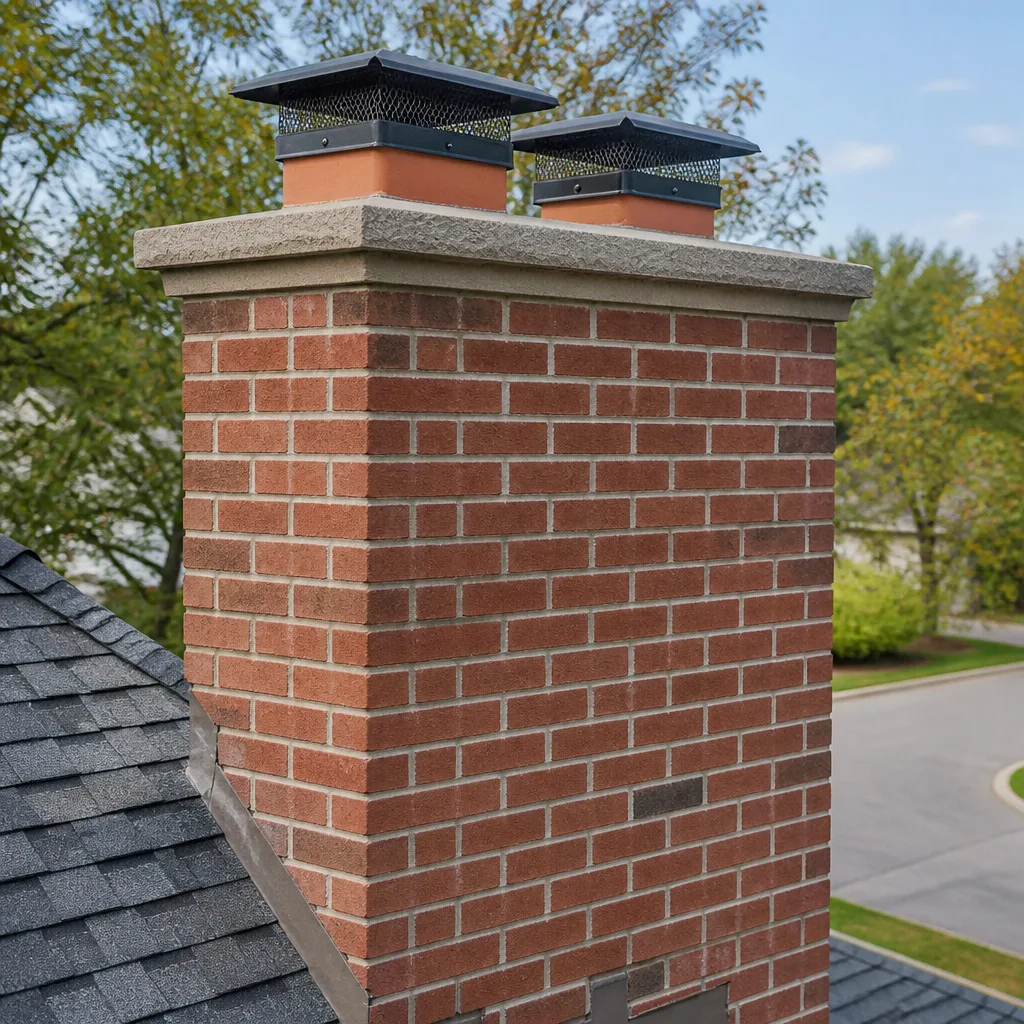
Level 1 sweep and inspection to the NFPA 211 annual standard - flue, crown, cap, and flashing checked and photographed
Chimney sweep logs do not sweep chimneys. They loosen some creosote - which then falls where a brush and vacuum still have to collect it.



 Before
 After
After Before
 After
After Before
 After
AfterHow to Hire a Chimney Cleaning Contractor in Fredericksburg: A Step-by-Step Guide
A contractor who quotes you a price before asking what fuel you burn, how old your liner is, or whether you’ve had any smoke backdraft problems doesn’t have enough information to give you a real price. He has a price he decided before he knew anything about your chimney. In Fredericksburg, where our clay-heavy soils shift foundations and our humid summers accelerate mortar decay, that kind of blind bidding is how homeowners end up with half-swept flues, damaged liners, and bills that triple by the time the truck leaves the driveway. This guide-along with our more guides & resources-reorders the hiring conversation so the red flags surface before you write a check.
Quick Answer
To hire a chimney cleaning contractor in Fredericksburg, verify CSIA certification on the official website, insist on a written scope that specifies access method and photo documentation, ask three diagnostic questions before discussing price, and demand a written guarantee that names specific outcomes rather than vague “lifetime” promises. A legitimate sweep in the Fredericksburg market will inspect before bidding, explain findings in plain English, and leave you with photos you can see for yourself.
Table of Contents
- The Three Questions to Ask Before Price
- How to Verify Real Credentials (Not Just Claims)
- What a Written Scope of Work Must Include
- Guarantee vs. Warranty: What Actually Protects You
- Spotting Bait-and-Switch Pricing in Fredericksburg
- What Happens During a Legitimate Chimney Inspection
- Red Flags That Should Stop the Conversation
- Common Mistakes to Avoid
- When to Call a Professional
- Frequently Asked Questions
The Three Questions to Ask Before Price
Most hiring guides tell you to get three quotes. That’s fine advice for roofing or painting. For chimney work, it’s backwards. A contractor who gives you a number before understanding your system is either guessing or planning to change that number later. We’ve been sweeping chimneys in Fredericksburg for over 42 years, and we’ve learned that three questions separate diagnosticians from salespeople.
Question 1: What Fuel Do You Burn?
Wood, gas, and pellet systems accumulate different deposits and wear patterns. A sweep who doesn’t ask this first is preparing a generic pitch. Fredericksburg’s older neighborhoods, Falmouth, and the historic district near Caroline Street have pre-1980 masonry fireplaces that were often converted to gas inserts without proper liner sizing. That conversion detail changes everything about how we access the flue, what debris we expect, and whether we need to inspect the gas connection. A contractor who skips this question is not preparing to solve your problem. He’s preparing to sell you a standard package.
Question 2: What Is Your Liner Material and Approximate Age?
Clay tile, stainless steel, and cast-in-place liners each fail differently. Clay tile in Fredericksburg’s freeze-thaw climate cracks from thermal shock. Stainless steel can corrode if the wrong alloy was used for the fuel type. Cast-in-place systems like HeatShield develop delamination if the original application missed the curing window in our humid summers. A contractor who doesn’t ask about liner material is not planning to inspect it carefully. He’s planning to find something wrong with it, because that’s where the upsell lives.
Question 3: When Was Your Last Level-2 Inspection, and Did It Include Photos?
If the answer is “I’ve never had one” or “The guy looked up from the fireplace with a flashlight,” you’re due. But more importantly, the contractor’s reaction to your answer tells you everything. A legitimate sweep explains what a Level-2 inspection involves: camera examination of the full flue length, inspection of accessible portions of the chimney exterior and interior, and documentation of findings. In Fredericksburg, where many homes in College Heights and the Cowan Boulevard area date to the 1960s and 1970s, previous owners’ maintenance records are often nonexistent. A good contractor plans for that uncertainty. A bad one plans to exploit it.
Only after these three questions are answered should price enter the conversation. At Hearthstone Chimney Co., we ask them on every call. The answers shape whether we recommend our $89 Seasonal Tune-Up or a full Level-2 inspection with camera documentation. The price follows the diagnosis. It never precedes it.
How to Verify Real Credentials (Not Just Claims)
Virginia requires a Class C contractor license for chimney work, and that’s worth checking through the Department of Professional and Occupational Regulation; for details on permits and inspections, see our guide to Chimney Cleaning Permits, Codes & Inspections in VA: What You Need to Know. But here’s what most homeowners miss: a state contractor license is a business credential, not a trade credential. It means the company filed paperwork and carries insurance. It does not mean the person on your roof understands flue gas dynamics or knows how to identify pyrolyzed creosote.
CSIA Certification: The Only Credential That Matters
The Chimney Safety Institute of America (CSIA) is the recognized standard for chimney sweep certification. A CSIA Certified Chimney Sweep has passed a closed-book exam on codes, clearances, and combustion technology, and must recertify every three years with continuing education. Here’s how to verify it in real time:
- Go to csia.org and click “Find a Certified Chimney Sweep.”
- Enter the technician’s name or the company name.
- Check that the certification status shows “Active” and the expiration date is in the future.
- Ask the contractor for their CSIA ID number and cross-reference it on the site.
If a contractor claims certification but can’t be found on CSIA’s database, that’s not a minor discrepancy. That’s a misrepresentation. We’ve encountered homeowners in Fredericksburg’s Lee’s Hill and Massaponax areas who were told their sweep was “certified” only to learn later that the certification belonged to someone who left the company years ago.
Other credentials have value but narrower scope. A F.I.R.E. certification focuses on fireplace installation. NFI certification covers hearth appliance specifics. These are supplementary, not substitutes. The baseline question is always: is the person who will work on my chimney CSIA certified, and can I verify that myself?
What a Written Scope of Work Must Include
Verbal promises evaporate. A written scope of work is your only protection when the job goes sideways, and in chimney work, sideways happens more often than contractors admit. Fredericksburg’s older masonry, our wet winters, and the hidden nature of flue damage mean that every job carries discovery risk. The written scope is how you control that risk.
Four Elements Every Scope Must Specify
1. Access Method
Will the technician access the flue from the roof, from the fireplace opening, or both? Will they need to remove the damper? Will they use drop cloths and protective coverings for your flooring and furniture? In Fredericksburg’s historic homes near Princess Anne Street, access can be complicated by narrow chimneys, decorative surrounds, or structural modifications from previous owners. The scope should anticipate these complications, not ignore them.
2. Debris Containment
Chimney sweeping produces soot, creosote fragments, and sometimes masonry debris. The scope must state how this material will be contained, whether a vacuum system will be used, and how the work area will be protected. We’ve responded to calls from homeowners in Spotsylvania County who hired cut-rate sweeps and spent days cleaning soot from carpets the contractor never covered.
3. Photo Documentation
This is non-negotiable. A legitimate inspection produces images of the flue interior, the smoke chamber, the damper assembly, and any damage found. At Hearthstone, our Level-2 inspections end with photos the homeowner can see and a plain-English verdict. If a contractor says “I saw damage but didn’t photograph it,” you have no way to verify that claim, no way to get a second opinion, and no way to dispute a recommended repair. Photos you can see, a plain-English verdict. That’s the standard.
4. Change Order Protocol
What happens if additional damage is found mid-job? The scope must specify that no additional work will proceed without homeowner approval, and that any recommended repairs will be documented with photos and a written explanation. This is where bait-and-switch lives: the “while we’re here” upsell that turns a $200 sweep into a $2,000 “emergency repair.” A square deal means no surprises on the bill.
Guarantee vs. Warranty: What Actually Protects You
Chimney contractors love the word “lifetime.” Lifetime guarantee. Lifetime warranty. It sounds substantial. It rarely is.
A warranty is a legal document with exclusions, proration clauses, and conditions that often void coverage. Read the fine print on a “lifetime liner warranty” and you’ll find it requires annual professional inspections by the original installer, excludes damage from chimney fires, and prorates replacement value after the first decade. The word “lifetime” refers to the product’s expected life, not yours, and the expected life of a chimney liner under real-world conditions is not what the manufacturer claims in laboratory testing.
A guarantee is different. A guarantee is a promise of performance, backed by the company’s reputation and stated in specific terms. Our 90-Day Done Right Promise doesn’t use the word “lifetime” because that’s not the point. The point is this: if it’s not done right, we make it right. Backed in writing. No paperwork. No arguing. Governed by our K.E.Y.S. values code: Krafted right, Every time, Your home first, Standing behind it.
When evaluating a contractor’s promise, ask these questions:
- What specific outcome does this promise cover? “Done right” is vague. “No debris remaining in flue, no damage to liner or masonry, and full documentation provided” is specific.
- What triggers the promise? Do you need to find the problem, or will the contractor check their own work?
- What is the resolution process? Is it “call us and we’ll discuss it” or “we return and fix it at no charge”?
- Is it in writing? Verbal guarantees are worth the paper they’re printed on.
In Fredericksburg’s contractor market, we’ve seen companies offer “lifetime” warranties that require the homeowner to pay for annual inspections at rates that exceed the original repair cost within five years. That’s not a guarantee. That’s a subscription model dressed in reassuring language.
Spotting Bait-and-Switch Pricing in Fredericksburg
The Fredericksburg chimney market has a specific pricing pattern that homeowners should recognize. It starts with an inspection fee that seems reasonable, sometimes even low. The technician arrives, performs a cursory visual check, and then delivers alarming news: the flue is “unsafe,” the liner is “failing,” or the creosote buildup is “Stage 3” and requires immediate chemical treatment. The $99 inspection becomes a $1,800 “emergency service” before the homeowner has time to research or get a second opinion.
The Three Variations We See Most Often
The Low Inspection / High Upsell
A $79 or $89 inspection fee that doesn’t include camera examination. The technician claims to find damage that “can’t be photographed” but requires immediate repair. The inspection was never the product. The upsell was always the product.
The “Free” Inspection That Isn’t
Some companies advertise free inspections but charge for the “report” or require a deposit toward recommended repairs before releasing findings. In Virginia, this practice skirts consumer protection laws by technically providing the inspection while holding the results hostage.
The Seasonal “Special” With Hidden Conditions
A $99 sweep special that excludes “excessive buildup,” defined so broadly that virtually every chimney qualifies. The special price gets your attention. The redefined scope gets their margin.
Legitimate pricing in the Fredericksburg market for a basic sweep with visual inspection typically runs $150-$250. A Level-2 inspection with full camera documentation runs $300-$450, depending on access complexity and system type. Prices significantly below this range should prompt scrutiny, not celebration. At Hearthstone, our $89 Seasonal Chimney Cleaning Care for Fredericksburg: Year-Round Homeowner’s Guide Tune-Up is a defined service for systems that have been maintained annually and show no signs of damage. If we find issues, we document them with photos, explain your options, and let you decide. No pressure. No surprises.
What Happens During a Legitimate Chimney Inspection
Understanding the inspection process helps you evaluate whether what you’re getting is thorough or theatrical. A legitimate Level-2 inspection follows a structured protocol, not a improvised routine.
Step-by-Step: A Proper Level-2 Inspection
- Exterior examination: The technician inspects the chimney crown, cap, flashing, and visible masonry for cracks, spalling, or water damage. In Fredericksburg, where our clay soils cause differential settling, we pay particular attention to crown separation and flashing gaps that allow water intrusion.
- Firebox and damper assessment: The firebox is checked for cracked or missing firebrick, and the damper is tested for proper operation and sealed closure when shut.
- Smoke chamber evaluation: The area above the damper is examined for proper parging (smooth surfacing) and creosote accumulation. Rough or deteriorated smoke chamber surfaces accelerate creosote buildup and can contribute to chimney fires.
- Camera inspection of flue interior: A specialized camera is run the full length of the flue, documenting liner condition, joint separation, mortar loss, and any obstructions. This is where hidden damage reveals itself. In our experience with Fredericksburg’s 1970s-era construction in neighborhoods like Braehead Woods and Chancellor, we regularly find clay tile liners with cracked segments that were invisible from the firebox.
- Documentation and verbal explanation: Findings are presented with photos, explained in plain English, and classified by urgency: immediate safety concern, recommended repair, or monitor and re-inspect.
The entire process for a typical single-flue system takes 60-90 minutes. A “sweep” that takes 20 minutes and produces no documentation was not a sweep. It was a performance.
Red Flags That Should Stop the Conversation
Some warning signs are obvious. Others are subtle enough that experienced homeowners miss them. Here are the specific behaviors that should end your consideration of a contractor, compiled from four decades of hearing what went wrong before we arrived.
- Quotes a price without seeing the chimney or asking diagnostic questions. This is the original sin of bad chimney contracting. Every system is different. Every legitimate price is conditional on specific findings.
- Claims CSIA certification but won’t provide an ID number or resists verification. Verification takes 30 seconds on csia.org. Resistance means the claim is false or borrowed.
- Recommends immediate, expensive repairs without photo documentation. If the damage is real, it photographs. If it doesn’t photograph, you have no way to verify its existence or severity.
- Uses scare tactics about chimney fires or carbon monoxide without specific findings. Both risks are real. Both should be documented with evidence, not invoked as general threats to close a sale.
- Requires a large deposit before work begins. Standard practice is payment upon completion for routine sweeping and inspection. Large deposits for repair work should be tied to material procurement with receipts, not demanded upfront as a condition of scheduling.
- Has no physical business address or uses only a PO box. In Fredericksburg, legitimate contractors maintain local offices or showrooms. Mobile-only operations with no fixed location are difficult to hold accountable.
- Cannot explain their guarantee in specific terms. “We’re fully guaranteed” is not an explanation. “90-Day Done Right Promise: if it’s not right, we come back, in writing, no arguing” is.
Common Mistakes to Avoid
- Hiring based on the lowest quote alone. In the Fredericksburg market, the lowest quote often excludes camera inspection, omits debris containment, or assumes a simple system that yours is not. The cheapest sweep is the most expensive if you have to hire someone else to redo it.
- Assuming a contractor license equals trade expertise. Virginia’s contractor licensing tests business knowledge, not chimney science. CSIA certification tests the science. Verify both, but weight the trade credential more heavily.
- Skipping the written scope for “routine” work. Even a basic sweep can damage an aging liner or dislodge deteriorated masonry if done without proper access planning. The scope protects you on every job, not just the big ones.
- Accepting verbal promises about timing or guarantees. “We’ll be there when we say” is easy to claim. A company that has answered with a live person 24 hours a day, 7 days a week for over 42 years has demonstrated that commitment. Newer operations making the same claim have not yet earned the trust.
- Neglecting to ask about insurance specifics. General liability is standard. Workers’ compensation is essential if technicians will be on your roof. Ask for certificates, not assurances.
- Failing to get a second opinion on major repairs. Our free second opinion on any written estimate exists because we’ve seen $4,000 “liner replacement” recommendations that our inspection revealed were unnecessary. The original contractor had photographed a shadow and called it a crack.
- Waiting until burning season to schedule. Fredericksburg’s first cold snap in late October creates a scheduling backlog that extends into December. Inspect in spring or summer. Repair at your leisure. Burn with confidence when the temperature drops.
When to Call a Professional
Call a professional when you notice any of these: smoke backing up into the room, a strong odor from the fireplace when not in use, visible cracks in the firebox or exterior masonry, white staining (efflorescence) on the chimney exterior, or if it’s been more than a year since your last professional inspection. In Fredericksburg’s climate, where summer humidity drives moisture into masonry and winter freeze-thaw cycles expand those cracks, annual inspection is prudent maintenance, not excessive caution.
We’re not going to tell you that every uninspected chimney is a disaster waiting to happen. That would be scare-selling, and we don’t do it. We will tell you that a documented inspection with photos you can see removes the uncertainty that keeps you from enjoying your fireplace, and that undiagnosed liner damage or creosote accumulation can escalate from manageable to hazardous faster than most homeowners expect.
Hearthstone Chimney Co. offers free estimates in Fredericksburg. Call (540) 596-5531. A live person answers, every hour of every day. We’ll ask the three questions. We’ll explain what we find. And we’ll stand behind our work with the 90-Day Done Right Promise, in writing, no arguing.
Frequently Asked Questions
A basic chimney sweep with visual inspection in Fredericksburg typically costs $150-$250, while a Level-2 inspection with full camera documentation runs $300-$450 depending on system complexity and access (see our Chimney Cleaning Cost Breakdown: The Fredericksburg Homeowner’s Reference for 2026). Prices below this range often exclude essential elements or assume conditions that don’t match real chimneys. Call (540) 596-5531 for an exact quote on your specific system. Estimates are free.
The National Fire Protection Association recommends annual inspection, with sweeping frequency determined by use and fuel type. Wood-burning systems in regular use typically need annual sweeping. Gas systems need less frequent cleaning but still require annual inspection of connections and venting. Fredericksburg’s humid summers can accelerate corrosion in gas venting and promote organic growth in unused flues, making annual inspection particularly important for seasonal users. Call (540) 596-5531 to schedule.
You need a new liner only if your existing liner is damaged, improperly sized for your appliance, or missing entirely. The only way to know is through camera inspection of the full flue length. We’ve inspected chimneys in Fredericksburg where previous contractors recommended liner replacement based on a flashlight glance from the firebox. Our camera inspection revealed intact, functional clay tile. Nothing is recommended without camera evidence you can see for yourself. Call (540) 596-5531 for a second opinion.
Skipped maintenance allows creosote accumulation, which increases chimney fire risk, and permits moisture intrusion and masonry deterioration to progress unchecked. In Fredericksburg’s climate, small cracks from freeze-thaw cycles expand rapidly when not repaired. The result is not immediate catastrophe but progressive, expensive damage that eventually requires rebuild rather than repair. Annual inspection catches problems when they’re manageable. Call (540) 596-5531 to schedule before burning season.
A proper sweep leaves the flue free of creosote deposits and debris, the work area clean, and the homeowner with photo documentation of the flue condition after cleaning. You should see the camera images, understand any findings, and receive a written report. If your sweep finished in 20 minutes, left no documentation, and can’t explain what they found, the job was not thorough. At Hearthstone, we complete most jobs in a single visit with no-hassle upfront pricing, and we don’t leave until you’ve seen the photos and understand the verdict.
No. Virginia requires a contractor license for chimney work, but CSIA certification is voluntary. That’s precisely why it matters. A contractor who pursues and maintains CSIA certification has demonstrated commitment to trade-specific knowledge beyond minimum legal requirements. We require CSIA certification for all Hearthstone technicians because Virginia’s licensing standard doesn’t test flue gas dynamics, creosote chemistry, or proper liner installation. Verify any claimed certification at csia.org before hiring.
The Bottom Line
Hiring a chimney contractor in Fredericksburg comes down to sequence and specificity. Ask diagnostic questions before discussing price. Verify credentials yourself rather than accepting claims. Insist on written scopes with photo documentation. Distinguish real guarantees from marketing language. And recognize that in a market with both established craftsmen and itinerant operators, the contractor who plans to be here in thirty years acts accordingly. We’ve been serving local communities for over 42 years. We’ll be here when you need us. Done right, and we stand behind it.
Written by Russell Haines, Owner at Hearthstone Chimney Co., serving Fredericksburg since 2014.