
Last updated September 10, 2026
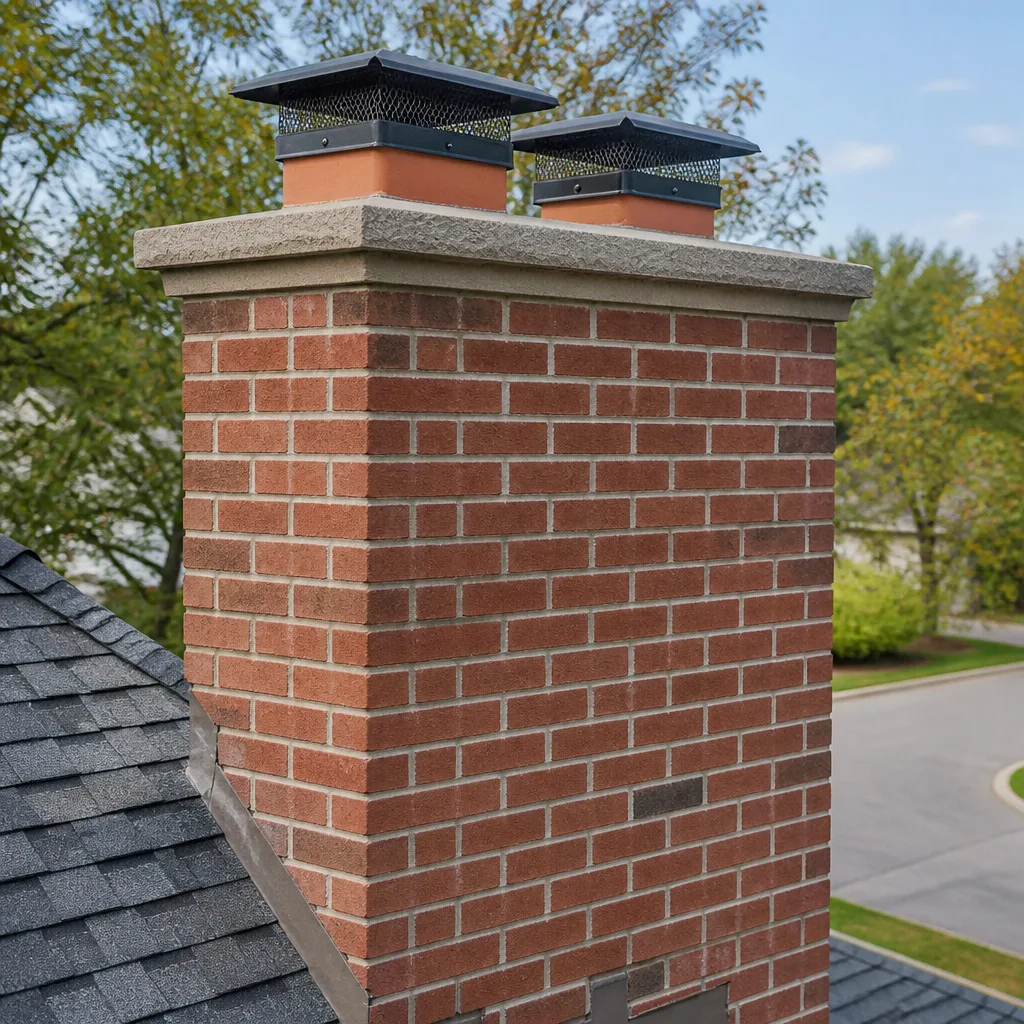
Level 1 sweep and inspection to the NFPA 211 annual standard - flue, crown, cap, and flashing checked and photographed
Chimney sweep logs do not sweep chimneys. They loosen some creosote - which then falls where a brush and vacuum still have to collect it.



 Before
 After
After Before
 After
After Before
 After
AfterDIY vs Professional Chimney Cleaning: The Fredericksburg Homeowner’s Decision Guide
Every year in Fredericksburg, we pull brushes from chimneys where a homeowner started with good intentions and ended with a cracked liner, a dislodged mortar joint, or a flue fire waiting to happen. The brush kits at hardware stores cost $60. The average liner repair in our market runs $2,800 to $4,500. The real divide between DIY and professional chimney cleaning is not elbow grease or courage. It is whether you can see what your brush just touched. This guide shows Fredericksburg homeowners exactly where the DIY line sits, what equipment separates a safe brush job from a dangerous guess, and how to decide without learning the hard way, with more guides & resources available for those who choose professional help.
Quick Answer
DIY chimney cleaning is reasonable for straight, unlined masonry flues with light, first-stage creosote if you also inspect the firebox and crown yourself. For Fredericksburg homes with clay tile liners, stainless steel liners, offset flues, or any creosote beyond a light powdery coating, professional cleaning with a Level-2 camera inspection is the only safe path. The brush is half the job; the inspection is what keeps your house standing.
Table of Contents
- What DIY Chimney Cleaning Actually Accomplishes
- The Equipment Gap: Cameras, Training, and What They Reveal
- Three Scenarios Where DIY Cleaning Is Actively Dangerous
- The Real Cost of a DIY Mistake in Fredericksburg
- A Decision Tree for Fredericksburg Homeowners
- What Professional Chimney Sweeping Includes
- Common Mistakes to Avoid
- When to Call a Professional
- Frequently Asked Questions
- The Bottom Line
What DIY Chimney Cleaning Actually Accomplishes
A standard DIY chimney brush kit includes a fiberglass or poly rod set, a wire or poly brush head sized to your flue diameter, and a basic instruction sheet. Used correctly, this equipment removes first-stage creosote, the light, powdery or flaky deposit that forms when wood burns hot and complete. If your fireplace draws well, you burn seasoned hardwood, and you sweep annually, first-stage creosote is likely all you have.
Here is what a DIY brush job can reasonably achieve:
- Dislodge first-stage creosote from the walls of a straight, vertical masonry flue with no offsets or bends
- Push debris downward into the firebox for collection and removal
- Provide basic mechanical cleaning of the smoke chamber and damper area if the kit includes a hand brush
- Allow visual inspection of accessible components: the firebox floor, damper blade, and throat area
The catch is in the conditions. A straight, vertical masonry flue without a liner is increasingly rare in Fredericksburg. Most homes built after 1960 have clay tile liners. Many older homes in neighborhoods like Downtown Fredericksburg, Belmont, and College Heights have had stainless steel liners installed to bring unlined masonry up to code. Both liner types change the physics of brushing. Clay tile edges can chip. Stainless steel flex liners can be dislodged from their top collars if a brush catches a seam. And neither condition is visible from below.
In our experience across Spotsylvania County and the greater Fredericksburg area, the homeowners who succeed with DIY cleaning share three traits: they burn exclusively seasoned hardwood, they clean every year without fail, and they have a simple, unlined masonry chimney with no known history of liner damage or water intrusion. That profile describes perhaps fifteen percent of the chimneys we see.
For everyone else, the brush kit is a partial solution that creates a false sense of completion. The flue looks cleaner. The creosote dust in the firebox confirms effort. But the critical questions, whether the liner is intact, whether mortar joints have opened, whether a hidden creosote deposit has been pushed into a ledge or offset, remain unanswered. And in chimney work, unanswered questions become expensive surprises.
The Equipment Gap: Cameras, Training, and What They Reveal
The professional chimney sweep’s most important tool is not the brush. It is the camera. Specifically, a continuous-feed video inspection system that can traverse the full length of a flue, record high-resolution footage, and display it in real time on a screen the homeowner can watch.
These systems cost between $3,000 and $8,000 for a professional unit. They are not available for rental at hardware stores. They require training to operate without damaging the camera head or missing critical indicators. And they reveal conditions that no brush kit can address or even detect.
Here is what a Level-2 camera inspection, the standard we perform on every chimney cleaning and sweep in Fredericksburg, is designed to find:
- Cracked or spalled clay liner tiles - hairline fractures that open under thermal stress, allowing heat and combustion gases to reach combustible framing
- Deteriorated mortar joints between liner tiles - gaps that permit creosote to accumulate behind the liner and create a fire path
- Displaced or disconnected stainless steel liner sections - common in systems installed without proper top collars or support plates
- Third-stage or glazed creosote - a hard, tar-like deposit that requires chemical treatment and rotary removal, not brushing
- Obstructions and restrictions - bird nests, collapsed liner sections, or construction debris that reduce draft and increase creosote formation
- Evidence of previous chimney fires - distorted metal, thermal cracking, or scorched deposits that homeowners often mistake for normal wear
The training to read these images takes years. A cracked liner tile and a shadow from a mortar joint look nearly identical to an untrained eye. A hairline fracture at the tenth course of a flue, invisible from below, is the difference between a safe heating season and a structure fire. In 2023, the National Fire Protection Association attributed 22,500 chimney fires nationally to liner and structural failures that inspection would have caught.
Fredericksburg’s climate amplifies some of these risks. Our freeze-thaw cycles are hard on masonry. Water intrusion through a cracked crown or deteriorated flashing saturates mortar joints, which expand when frozen and open gaps that camera inspection reveals before they become structural failures. The humid summers here also promote faster creosote conversion, especially in chimneys with marginal draft. First-stage creosote left through a damp summer can harden to second-stage by fall. For a complete maintenance calendar, see our Seasonal Chimney Cleaning Care for Fredericksburg: Year-Round Homeowner’s Guide.
We document every inspection with photos the homeowner can see and a plain-English verdict. Not a technical report. A clear statement of what we found, what it means for safety and function, and what should happen next. That documentation matters if you sell your home, file an insurance claim, or simply want to know that the job was done right.
Three Scenarios Where DIY Cleaning Is Actively Dangerous
There are chimneys where a brush kit is merely inadequate, and there are chimneys where it is hazardous. We encounter all three scenarios regularly in Fredericksburg homes, from historic properties near Caroline Street to newer construction in Lee’s Hill and Massaponax.
Scenario 1: Stage-2 or Stage-3 Creosote
Creosote develops in three stages. First-stage is powdery or flaky, easily brushed. Second-stage forms shiny black flakes or crisp, porous deposits. Third-stage is a hard, glossy, tar-like coating that adheres to flue walls like enamel.
Brushing third-stage creosote does not remove it. It polishes it. The brush glazes the surface, creating a harder, more impervious layer that restricts flue diameter and accelerates future buildup. Worse, aggressive brushing can fracture the deposit, sending chunks down to lodge in offsets or smoke chamber ledges where they obstruct airflow and create concentrated fire hazards.
Third-stage creosote requires chemical treatment to soften it, followed by rotary chain or whip removal with controlled speed and pressure. This equipment is not available to homeowners. The chemical treatments themselves, typically alkaline-based powders or sprays, require precise application and dwell time calculations based on deposit thickness and flue material. Misapplied, they damage liners and produce toxic residues.
Scenario 2: Damaged Clay Liner Tiles
A clay tile liner with a hairline crack or corner spall looks intact from below. The brush passes over it without obvious resistance. But the mechanical action of brushing, especially with an oversized or overly stiff brush, can extend the crack, dislodge a spalled fragment, or wedge brush bristles into the gap and pull the tile out of position on retrieval.
In Downtown Fredericksburg, we regularly see 1920s-era chimneys with original clay liners that have survived a century of thermal cycling. They are brittle. They are often held in place by deteriorated mortar that brushing can disturb. A displaced liner tile creates an immediate fire hazard, exposing combustible framing to direct heat and sparks, and it is not discoverable without camera inspection.
If you brush a damaged liner and do not know it, you may operate your fireplace through the winter with a false sense of security. The first indication of trouble is often a chimney fire or carbon monoxide intrusion, both of which can be fatal.
Scenario 3: Offset or Non-Standard Flue Configurations
Not all flues run straight. Many chimneys, especially in older Fredericksburg homes with multiple fireplace openings or kitchen hearth additions, have offsets, bends, or transitional sections where a smaller flue connects to a larger chimney structure. These configurations are invisible from below and often unknown to homeowners who have never seen a camera inspection.
A brush rod assembly is rigid. It does not navigate offsets. Forcing it creates several risks: the rod can jam, requiring destructive retrieval; the brush head can separate and remain lodged in the flue; or the mechanical stress can damage liner sections at the offset point. We have retrieved separated brush heads from chimneys where a homeowner’s $60 kit became a $400 extraction call, not counting the damage the failed brushing caused.
Stainless steel flex liners, common in relined chimneys, have their own offset considerations. They are designed to accommodate gentle bends, but a brush catching an unsupported midsection can dislodge the liner from its top termination, creating a gap where combustion gases escape into the chimney cavity. This condition produces no visible symptom until a carbon monoxide detector alarms or a fire starts in the wall.
The Real Cost of a DIY Mistake in Fredericksburg
The hardware store sells confidence cheap. The local market charges for corrections. Here are realistic cost ranges for repairs that follow DIY cleaning gone wrong, based on scopes we have completed in the Fredericksburg area over the past five years. For detailed pricing context, see our Chimney Cleaning Cost Breakdown: The Fredericksburg Homeowner’s Reference for 2026.
| Repair Type | Typical Scope | Cost Range in Fredericksburg Market |
|---|---|---|
| Stainless steel liner repair or section replacement | Dislodged collar, damaged flex section, or failed connection at insert | $1,800 – $3,200 |
| Clay tile liner repair (HeatShield cerfractory application) | Joint repair and resurfacing for minor cracking without full relining | $2,200 – $3,800 |
| Full stainless steel liner replacement | Complete relining of masonry chimney for fireplace or insert | $2,800 – $5,500 |
| Smoke chamber parging | Corbelled smoke chamber resurfaced to reduce turbulence and creosote accumulation | $1,400 – $2,600 |
| Smoke damage restoration | Interior cleaning, sealing, and repainting after chimney fire or backdraft event | $3,500 – $8,000 |
| Structural masonry repair | Tuckpointing, crown rebuild, or partial chimney rebuild after water/fire damage | $2,500 – $12,000 |
These figures exclude the less quantifiable costs: a winter without usable heat, the deductible and rate increase from an insurance claim, or the liability exposure if a guest is injured by carbon monoxide or fire spread.
The preventive alternative is straightforward. A professional chimney cleaning and sweep in Fredericksburg with Level-2 inspection runs $250 to $400 for a standard fireplace system. That inspection catches conditions before they become repairs. The photos give you evidence. The plain-English verdict gives you clarity. And the 90-Day Done Right Promise means if anything is not right, we make it right, in writing, no arguing.
Compare that to the economics of DIY. Brush kit: $60. Potential repair if something goes wrong: $2,800 to $5,500. Probability of an undetected problem in an uninspected chimney: significant, based on our field data. About forty percent of chimneys we inspect for the first time show conditions that require repair or monitoring before safe use.
A Decision Tree for Fredericksburg Homeowners
Use this framework to make an honest assessment. No moralizing. No scare tactics. Just the factors that determine whether DIY cleaning is reasonable for your specific chimney.
Step 1: Identify Your Fuel Type and Burning Pattern
Seasoned hardwood only, burned hot with good air supply: First-stage creosote likely. Proceed to Step 2.
Softwood, unseasoned wood, or frequent low-temperature fires: Higher creosote formation, likely second-stage or worse. Professional cleaning and inspection required. Do not attempt DIY.
Gas fireplace or gas insert: Minimal creosote, but inspect for debris, moisture damage, and venting integrity. Professional inspection every two years; cleaning as needed.
Step 2: Determine Your Last Professional Inspection Date
Within 12 months, with documented Level-2 camera inspection showing sound liner and no deferred repairs: Proceed to Step 3.
More than 12 months, or never, or unknown: Professional inspection required before any DIY attempt. You cannot assess what you cannot see.
Previous inspection found conditions requiring monitoring or repair: Professional follow-up required. Conditions change; cracks propagate; mortar deteriorates.
Step 3: Assess Your Firebox and Accessible Components
Firebox brickwork sound, no spalling or missing mortar; damper operates smoothly; smoke chamber visible and smooth; no staining or efflorescence on exterior chimney: Proceed to Step 4.
Any damage, deterioration, or unfamiliar configuration visible: Professional evaluation required. Visible damage predicts hidden damage.
Step 4: Evaluate Your Flue Configuration
Straight, vertical masonry flue, no liner, no known offsets, no construction modifications: DIY brushing may be reasonable if Steps 1-3 are satisfied. Clean carefully, inspect the brush and rods for damage on retrieval, and schedule professional inspection before the next burning season.
Lined flue (clay tile or stainless steel), offset configuration, or any uncertainty about flue path: Professional cleaning and inspection required. The risk of liner damage or brush entrapment outweighs any cost savings.
Step 5: Consider Your Physical Capacity and Comfort
Roof access is not required for all DIY cleaning, but it is required for thorough inspection of the crown, cap, and flue opening. If you are not comfortable on a ladder, if your roof pitch is steep, or if your chimney is two or more stories, the physical risk of DIY inspection is significant. In Fredericksburg’s older neighborhoods, many chimneys exceed 30 feet with limited safe ladder placement. Professional technicians carry proper fall protection and liability coverage.
Final recommendation: If you reach Step 4 and your chimney is an unlined, straight, recently inspected masonry flue with light creosote and sound visible components, DIY brushing is a reasonable maintenance activity between professional visits. For every other configuration, professional service is the appropriate choice. Not because you are incapable. Because the equipment to verify safety is not available to you, and the cost of being wrong is too high.
What Professional Chimney Sweeping Includes
A professional chimney sweep is not simply a person with a better brush. It is a structured service with documented standards, trained execution, and accountable outcomes. At Hearthstone Chimney Co., our process reflects what we have learned in over 42 years of serving Fredericksburg-area homeowners.
Pre-service documentation. We record the appliance type, fuel, installation date if known, and any homeowner concerns. We review previous inspection records if available.
Exterior assessment. Crown condition, cap integrity, flashing, and brickwork are photographed and noted before we enter the home. Water intrusion from above is a leading cause of liner and masonry failure in our climate.
Interior protection. Drop cloths, HEPA vacuums, and sealed pathways prevent soot migration into living spaces. We treat your home with the care we would want in our own.
Mechanical cleaning. Brushes, whips, or rotary systems selected for your specific flue material and deposit type. For glazed creosote, we apply appropriate chemical treatment and return for completion.
Level-2 camera inspection. Continuous-feed video of the full flue length, with still photography of any conditions requiring attention. You watch in real time or review the footage afterward.
Smoke chamber and firebox inspection. Visual and tactile assessment of corbelling, parging, damper function, and firebox integrity.
Written report with plain-English verdict. Not a checklist. A clear statement of what we found, what it means, and what we recommend, with priority ranking and cost ranges where repairs are indicated.
90-Day Done Right Promise. If anything is not right, we make it right. In writing. No arguing. Governed by our K.E.Y.S. values: Krafted right, Every time, Your home first, Standing behind it.
Our technicians are background-checked and uniformed. Most jobs are completed in a single visit. Pricing is agreed upfront, so the number on the estimate is the number on the invoice. And a live person answers our phone 24 hours a day, 7 days a week, because chimney concerns do not follow business hours.
We work exclusively with professional-grade materials from brands we trust: HeatShield for cerfractory resurfacing, Gelco for caps and screening, Olympia Chimney for liner systems, Famco for termination components, and Copperfield for specialty repair materials. No builder-grade substitutes. The difference shows in longevity and safety margins.
For chimney repair in Fredericksburg or ongoing fireplace services in Fredericksburg, the same standards apply. Every job documented, every recommendation supported by evidence you can see, every outcome backed by our promise.
Common Mistakes to Avoid
- Brushing without inspecting the flue opening first. A bird nest, wasp colony, or deteriorated cap can make rod insertion dangerous or impossible. Always examine the chimney top before attempting to brush from below.
- Using a brush sized incorrectly for the flue. An oversized brush jams or damages liners. An undersized brush centers on the rod and misses the walls entirely. Measure your flue diameter precisely, or use an adjustable brush that you verify at full extension.
- Assuming a clean firebox means a clean flue. Creosote deposits heaviest in the cooler upper sections of the flue, far from visual or physical access. The firebox can look acceptable while the flue above is hazardous.
- Ignoring Fredericksburg’s hard water and humidity effects on masonry. Efflorescence on exterior brick, white staining inside the firebox, or a musty smell after rain indicate water intrusion that accelerates liner and mortar deterioration. These symptoms require professional assessment, not more brushing.
- Brushing a chimney with a known or suspected previous fire. Thermal damage weakens liners and mortar. Mechanical cleaning can complete a failure that heat stress began. If you have ever heard a roaring sound from the chimney, seen flames at the top, or found cracked or discarded flue pieces, stop and call a professional.
- Neglecting the smoke chamber. The corbelled area above the damper is where many chimney fires start. It is nearly impossible to clean thoroughly with hand tools, and its condition is invisible from below without specialized access equipment.
- Waiting for symptoms before acting. Poor draft, smoke spillage, or a persistent odor are late indicators. The conditions causing them have been developing for seasons. Annual inspection catches problems before they announce themselves.
When to Call a Professional
Call a professional sweep when your chimney has any liner type other than bare masonry, when creosote exceeds light powdery deposits, when the flue configuration is unknown or includes offsets, when any visible damage is present, or when more than twelve months have passed since the last Level-2 camera inspection. Call when you are not certain, because uncertainty in chimney work is a warning in itself.
Call when you have moved into a Fredericksburg home with no chimney records. Call when you have changed fuel types or installed a new insert. Call after any chimney fire, lightning strike, or seismic event, however minor. Call when you smell smoke in rooms other than where the fireplace sits, or when your carbon monoxide detector activates, even once.
Hearthstone Chimney Co. offers free estimates in Fredericksburg. We will inspect your chimney, show you what we find, and give you a clear recommendation with no pressure to proceed. If your chimney is sound, we will say so. If it needs work, we will show you exactly why and what it costs before you decide. Call (540) 596-5531. A live person will answer.
Frequently Asked Questions
A standard professional chimney cleaning with Level-2 camera inspection in Fredericksburg typically ranges from $250 to $400 for a fireplace system, depending on flue accessibility, deposit type, and whether chemical treatment for glazed creosote is required. Insert systems and multi-flue chimneys may run higher. We provide no-hassle upfront pricing before any work begins, and our $89 Seasonal Tune-Up offers a limited-scope alternative for systems in good standing. Call (540) 596-5531 for an exact quote - estimates are free.
The National Fire Protection Association recommends annual inspection for all chimney systems, with cleaning frequency determined by deposit accumulation rather than calendar alone. In Fredericksburg’s climate, with humid summers that can accelerate creosote hardening and freeze-thaw winters that stress masonry, annual inspection is prudent for every system. Active wood-burning fireplaces used as primary heat sources may need sweeping mid-season if creosote exceeds one-eighth inch thickness. Call us to assess your specific burning pattern and schedule.
We do not recommend DIY cleaning on stainless steel flex liners. These systems have specific manufacturer requirements for brush type, rotation direction, and inspection protocol. Improper brushing can dislodge top collars, damage flex sections at support points, or void warranty coverage. The camera inspection that should accompany every stainless steel liner cleaning requires equipment and training not available to homeowners. Professional service protects your investment and your safety.
Skipped cleaning allows creosote to accumulate and harden, progressing from removable first-stage deposits to glazed third-stage buildup that restricts flue diameter and increases fire risk. Simultaneously, undetected liner damage, mortar deterioration, or water intrusion continues unchecked. The likely outcomes are degraded draft efficiency, smoke spillage into living spaces, carbon monoxide intrusion, or chimney fire. In Fredericksburg, where many homes have combustible framing adjacent to chimney structures, the consequences can be structurally catastrophic. The cost of prevention is a fraction of the cost of remediation.
You need a new liner when the existing liner no longer contains combustion gases and heat within the flue, or when it is incompatible with your appliance type. Cracked clay tiles, separated stainless steel sections, or unlined masonry serving a modern appliance all require correction. We do not recommend liner replacement without camera-documented evidence you can see for yourself. Many conditions we find can be repaired rather than replaced, using HeatShield cerfractory resurfacing or localized joint repair. We will show you the footage, explain the options, and tell you plainly when work can safely wait. Call (540) 596-5531 to schedule an inspection.
DIY chimney cleaning is not illegal for single-family homeowners working on their own property. However, Fredericksburg and Spotsylvania County building codes require permits for liner installation, structural modification, and certain repairs. Insurance policies may deny claims for fire damage if chimney maintenance was performed by an unqualified person without proper documentation. More importantly, Virginia’s Uniform Statewide Building Code adopts NFPA 211 standards for chimney safety, which specify inspection protocols beyond what DIY equipment can achieve. Legal or not, DIY cleaning without professional inspection creates liability and safety exposure that prudent homeowners avoid.
Schedule in spring or early summer, after the burning season ends and before the fall rush begins. Our appointment availability is best from April through August, and any recommended repairs can be completed before temperatures drop. Waiting until September or October means longer lead times and the risk of discovering needed repairs when you want to use your fireplace. That said, we answer calls year-round and complete most jobs in a single visit, so do not delay if you have safety concerns.
The Bottom Line
DIY chimney cleaning occupies a narrow space: straight, unlined masonry flues with light creosote, recent professional inspection, and a homeowner who understands exactly what the brush cannot do. For every other chimney in Fredericksburg, professional service is not an upgrade. It is the baseline for safe operation.
The equipment gap is real and permanent. No brush kit sold to consumers includes continuous-feed camera inspection or the training to interpret what it shows. The cost of crossing that gap wrong, measured in liner repairs, masonry restoration, or smoke damage, dwarfs the price of professional prevention.
We have been serving Fredericksburg-area homeowners for over 42 years. We plan to be here for thirty more. That long horizon shapes how we work: documented inspections, plain-English verdicts, professional-grade materials, and a promise in writing that we stand behind. Done right, and we stand behind it.
If you are uncertain where your chimney falls on the DIY-to-professional spectrum, call us. We will give you a straight answer, show you what we find, and let you decide with full information. No pressure. No surprises on the bill. Just the thing done correctly.
Written by Russell Haines, Owner at Hearthstone Chimney Co., serving Fredericksburg since 2014.