
Last updated September 10, 2026
Level 1 sweep and inspection to the NFPA 211 annual standard - flue, crown, cap, and flashing checked and photographed
Chimney sweep logs do not sweep chimneys. They loosen some creosote - which then falls where a brush and vacuum still have to collect it.

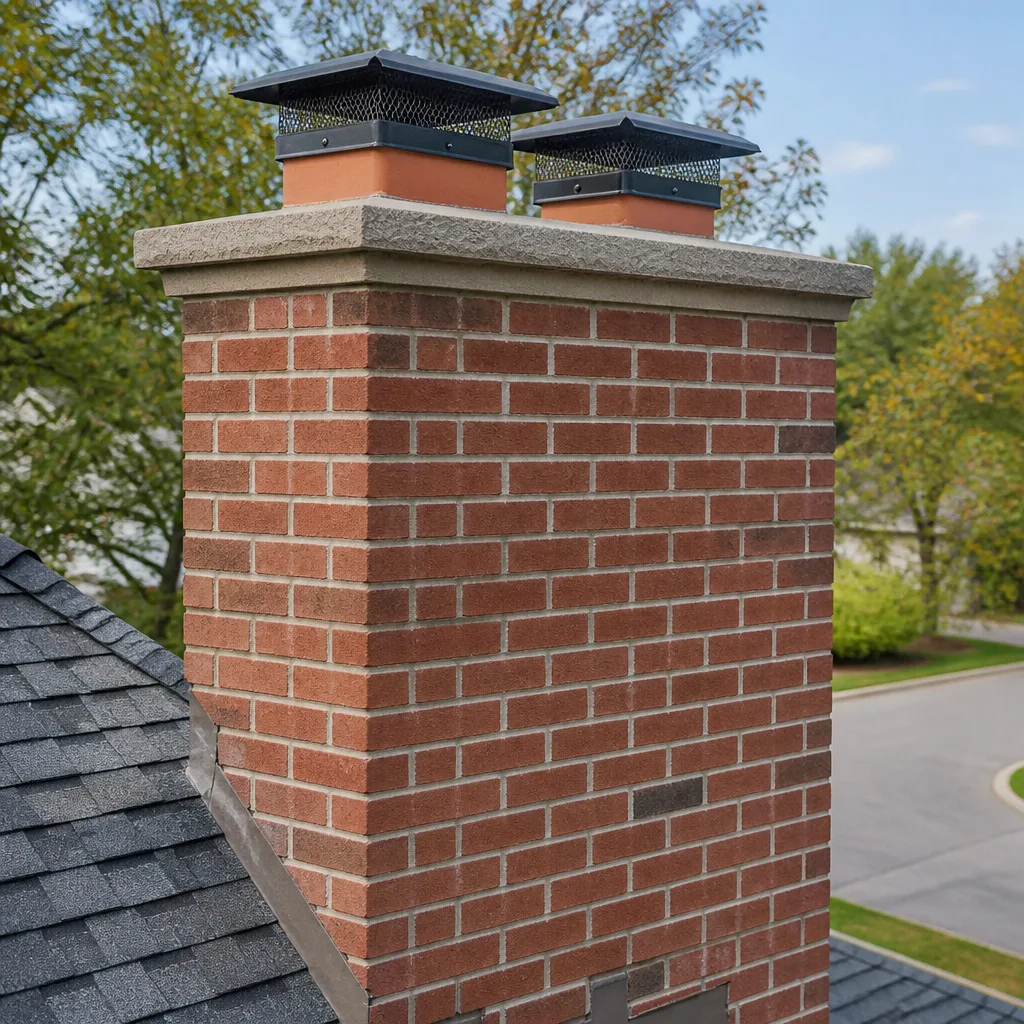


 Before
 After
After Before
 After
After Before
 After
AfterChimney Cleaning Warning Signs: A Fredericksburg Homeowner’s Reference Guide
A white stain on your chimney’s exterior brick isn’t cosmetic - it’s efflorescence, which means water is moving through your masonry and evaporating out the face. That water is also moving inward, toward your liner, framing, and attic. The stain is the billboard; the damage is behind the wall. After 42 years of answering calls in Fredericksburg and the surrounding counties, we’ve learned the most dangerous chimney warning signs aren’t dramatic. They’re the quiet ones homeowners rationalize away as “normal for an old house.” By the time the sign is obvious, the problem is expensive. This guide trains you to spot the early-stage signals that we find on calls where the homeowner says, “I didn’t think it was a big deal” - and points you to more guides & resources for keeping your system safe.
Quick Answer
The seven critical chimney warning signs every Fredericksburg homeowner should watch for are: white efflorescence stains on exterior brick, rust flakes in the firebox, glazed black creosote deposits, musty or sharp odors from the fireplace, lazy flames or smoke rollback during use, debris or animal sounds in the flue, and crumbling mortar or missing bricks on the crown. Exterior signs you can spot from the ground often reveal problems before interior symptoms appear. If you notice rust, glazed creosote, or smoke entering your living space, stop using the fireplace and schedule an inspection before lighting another fire. For a deeper look at maintenance decisions, see DIY vs Professional Chimney Cleaning: The Fredericksburg Homeowner’s Decision Guide.
Table of Contents
- Seven Exterior Visual Signals You Can Spot From the Ground
- Interior Firebox Clues: Reading Soot and Ash Like a Sweep
- Odor-Based Signals: What Your Chimney Is Trying to Tell You
- Performance Signals During a Fire: Draft Problems in Fredericksburg’s Climate
- Urgency Rankings: 30 Days Versus “Don’t Light Another Fire”
- Common Mistakes to Avoid
- When to Call a Professional
- Frequently Asked Questions
Seven Exterior Visual Signals You Can Spot From the Ground
Most Fredericksburg homeowners never look at their chimney until something goes wrong inside. That’s backward. The exterior tells the story first. These seven signs are visible from your yard, ranked by how quickly they can escalate from maintenance item to serious hazard.
1. White or Gray Powdery Stains (Efflorescence)
That chalky white film on your brick? It’s dissolved salts left behind when water moves through masonry and evaporates. In Fredericksburg, we see this constantly on homes in the Historic District and along the Rappahannock River basin, where humidity and seasonal groundwater fluctuations stress older brick. The stain itself is harmless. The water causing it is not. It’s finding a path through your crown, your mortar joints, or your brick faces, and it’s heading toward your flue liner, your attic sheathing, and your wall framing. We’ve opened up chimneys in the College Heights area where efflorescence was the only visible clue, and found saturated insulation and rusted damper frames behind the brick.
What to do: Photograph the stain and note if it reappears after rain. If it’s below the roofline, the crown or flashing is likely the entry point. If it’s scattered across the face, your mortar joints need repointing. Either way, water is winning.
2. Rust Stains Running Down the Brick
Orange or reddish-brown streaks mean metal is corroding somewhere above - usually your chimney cap, your chase cover (on prefab units), or your damper hardware. Rust never sleeps, and in Fredericksburg’s humid summers, it accelerates. A rusted chase cover on a prefab chimney in Spotsylvania County can funnel water directly into the firebox within two seasons. We’ve replaced chase covers where the metal had perforated so completely you could shine a flashlight through it.
What to do: Rust stains demand a level-2 camera inspection to trace the source. The stain is just the overflow; the real damage is inside the flue or chase.
3. Missing or Crumbling Mortar Joints
Repointing isn’t cosmetic maintenance. Open mortar joints are water highways. In Fredericksburg’s freeze-thaw climate, water enters overnight, expands by 9% when it freezes, and spalls the brick face by morning. We’ve seen 1920s chimneys in the downtown historic corridor where deferred repointing led to full rebuilds because the brick faces had exfoliated down to the cores. The repair cost jumped from $1,200 to $8,000.
What to do: Probe suspect joints with a flathead screwdriver. If mortar crumbles out, you’ve got open joints. Schedule repointing before the next freeze cycle.
4. Cracked or Deteriorated Crown
The concrete slab at your chimney’s top is its only horizontal defense. A sound crown sheds water like a roof. A cracked crown funnels water into the flue. In our experience, crowns on Fredericksburg homes built between 1960 and 1990 are particularly vulnerable - they were often poured too thin, without proper overhang or drip edge, and without steel reinforcement. We’ve inspected crowns in the Salem Church area that looked fine from the yard but had cracks you could slide a quarter into, running directly toward the flue tile.
What to do: Crown cracks are a “schedule within 30 days” issue unless you see water entry inside. Then it’s “don’t light another fire.”
5. Missing or Damaged Chimney Cap
A proper cap with mesh sides keeps rain, animals, and debris out while letting smoke escape. No cap, or a cap with corroded mesh, and you’re running an open flue. We’ve pulled squirrel nests, starling colonies, and once a full raccoon litter from uncapped chimneys in the Fredericksburg suburbs. Each animal intrusion introduces organic material that blocks airflow and creates odor and fire hazards.
What to do: Verify your cap is present, properly sized, and the mesh is intact. A chimney cleaning and sweep in Fredericksburg includes cap inspection, and replacement caps from Gelco or Olympia Chimney install in a single visit.
6. Spalled or Flaking Brick Faces
When brick faces pop off in curved chunks, exposing the softer interior, that’s spalling. It’s the end stage of freeze-thaw damage that started with open mortar joints or a failed crown. Spalled brick loses structural strength and weeps water constantly. In Fredericksburg’s older neighborhoods, we’ve seen chimneys where spalling had progressed so far the wythes (internal brick layers) were exposed and deteriorating.
What to do: Spalling is advanced damage. It won’t reverse, and patching doesn’t address the underlying water source. Plan for partial rebuild or comprehensive waterproofing.
7. Leaning or Separated Chimney
A chimney that tilts away from the house, or shows a widening gap at the roofline, has foundation or structural issues. This is the only exterior sign on this list that is immediately dangerous. The chimney’s weight is no longer distributed properly, and the gap is a direct fire path from flue to framing. In Fredericksburg’s clay-heavy soils, we’ve seen chimneys settle differentially after drought-followed-by-flood cycles like the ones in 2018 and 2021.
What to do: Do not use the fireplace. Call for structural evaluation. This is “don’t light another fire” territory.
Interior Firebox Clues: Reading Soot and Ash Like a Sweep
The color, texture, and location of deposits inside your firebox tell a story about how your chimney is performing. Most homeowners see “soot” as generic black stuff. To a sweep, it’s diagnostic evidence. Here’s what to look for.
Normal Residue Versus Problem Deposits
After a season of normal use, you should see:
- Light gray to black powdery ash on the firebox floor, easily swept away
- Thin, matte black film on the firebox walls and damper blade
- No buildup above the damper (that’s the flue’s territory, not the firebox)
These are signs of complete combustion, adequate draft, and proper fuel. The ash is what’s left after the wood gases have burned.
Glazed, Shiny Black Deposits (Stage 3 Creosote)
If you see thick, glossy black deposits that look like hardened tar, especially on the firebox walls or damper, that’s stage 3 creosote. It’s the result of incomplete combustion - usually burning unseasoned wood, restricting airflow with tight damper settings, or running a fireplace insert with poor draft. Stage 3 creosote is highly flammable and extremely difficult to remove with standard brushing. For the full process, read The Complete Guide to Chimney Cleaning in Fredericksburg; it covers mechanical removal, chemical treatment, and modified burning practices.
In Fredericksburg, we see stage 3 creosote most often in homes that burn purchased firewood stored green through our humid summers. Oak and hickory bought in spring and burned in fall rarely drops below 25% moisture content. Seasoned wood reads 20% or less on a moisture meter.
White or Gray Powdery Ash on Firebox Walls
This indicates excessive heat or alkaline conditions, often from burning construction debris, painted wood, or pressure-treated lumber. The white residue is leached mineral content. More importantly, these fuels release toxic compounds and burn at temperatures that damage firebrick and clay flue liners. We’ve replaced firebrick in Fredericksburg homes where the homeowner “just burned some old deck boards” and spalled the refractory surface.
Rust Flakes or Orange Staining
Rust in the firebox means water is entering from above and running down the flue. The water carries rust particles from your damper frame, fire grate, or - worst case - a corroded steel flue liner or chase cover. If you see rust flakes mixed with your ash, water has found a path. In our chimney repair in Fredericksburg work, rust in the firebox is one of the most reliable predictors of concealed crown or flashing failure.
Soot Deposits on the Hearth Extension or Mantel
Soot escaping the firebox and settling on the hearth, mantel, or nearby walls means smoke is rolling out into your living space. This happens when:
- The chimney is cold and hasn’t established draft before the fire reaches full intensity
- The firebox-to-flue ratio is mismatched (common in historic Fredericksburg homes with modified fireplaces)
- External depressurization from kitchen exhaust fans or HVAC systems overcomes the chimney’s natural draft
- The flue is partially blocked by creosote, debris, or animal nests
Smoke in your living space is never normal. It’s a combustion byproduct containing carbon monoxide, particulates, and volatile organic compounds. If you see soot outside the firebox, stop using the fireplace until the cause is identified.
Odor-Based Signals: What Your Chimney Is Trying to Tell You
Your nose is a more sensitive detection instrument than most homeowners realize. Chimney odors change with the problem, and each category points to a specific diagnosis. Here’s how to interpret what you’re smelling.
Musty, Damp, or Earthy Odors
This is moisture intrusion, full stop. Water in your chimney system breeds mold, mildew, and bacteria on organic deposits. The smell intensifies in humid weather and after rain. In Fredericksburg, we get these calls most often in late July and August, when humidity peaks and homeowners notice the fireplace smells like a basement.
The source is usually a failed crown, deteriorated flashing, or missing cap. Water runs down the flue, soaks into soot deposits, and stagnates. We’ve pulled saturated, blackened insulation from chimney chases in the Ferry Farm area where the homeowner reported “a mildew smell near the fireplace” for two years before calling. The chase cover had rusted through completely.
Action: Musty odors warrant inspection within 30 days. The moisture is actively damaging your system and creating biological growth you don’t want in your air.
Sharp, Acrid, or Chemical Smells
A sharp, eye-watering, almost tar-like odor indicates stage 2 or stage 3 creosote. The smell is concentrated hydrocarbons and wood tars that haven’t fully burned. It gets stronger as temperatures rise - you’ll notice it most on warm days when the sun heats the chimney exterior and drives off volatile compounds.
This is a pre-fire condition. Creosote ignites at approximately 451°F, and a normal fireplace can exceed that during active burning. The acrid smell is your chimney warning you that fuel is accumulating in the flue.
Action: Schedule a sweep before the next burning season. Do not assume the smell will dissipate; creosote doesn’t degrade on its own.
Sulfurous or Rotten-Egg Odors
A sulfurous smell from your fireplace is unusual and serious. It indicates one of three conditions:
- Animal intrusion, where a creature has died in the flue and is decomposing
- Gas leak from a gas log set or gas starter with a compromised valve or connection
- Back-drafting of sewer gases through a disconnected or damaged chimney liner in a furnace venting application
We’ve responded to calls in Fredericksburg where the homeowner reported “something died in the chimney” and found a disconnected gas flex line leaking slowly into the firebox. If you smell sulfur, treat it as a potential gas emergency until proven otherwise.
Action: Extinguish any pilot lights, ventilate the area, and call your gas utility or a professional immediately. Do not use the fireplace until the source is identified.
Smoky or Ashy Odors When Not in Use
If your fireplace smells like a campfire on humid days or when it rains, you have a draft problem. The chimney is acting as a reverse chimney, drawing household air downward and pushing trapped odors into your living space. This is common in Fredericksburg homes with exterior chimneys on the north or east sides, where solar heating is minimal and the flue stays cold.
The solution often involves a top-sealing damper, which seals the flue at the crown rather than the throat, or addressing negative pressure in the house from exhaust fans and HVAC systems.
Performance Signals During a Fire: Draft Problems in Fredericksburg’s Climate
How your fire behaves while burning reveals draft and airflow conditions that static inspection cannot. These performance signals are real-time diagnostics. Learn to read them.
Lazy, Floating, or Difficult-to-Start Flame
A healthy wood fire should have active, dancing flames that wrap around the logs. If your flames are small, orange, and seem to struggle for oxygen, you have inadequate combustion air or a restricted flue. Common causes in Fredericksburg:
- Tight house construction with inadequate makeup air (common in post-1990 homes in the Falmouth and Massaponax areas)
- Closed or partially closed damper
- Partial flue blockage from creosote or debris
- Competing exhaust fans (range hood, bathroom fans, dryer) creating negative pressure
Lazy flames produce more creosote because the wood gases don’t reach full combustion temperature. It’s a self-worsening cycle.
Smoke Rollout Into the Room
Smoke entering your living space during active burning is never acceptable. It indicates either:
- Cold flue syndrome: The chimney hasn’t warmed enough to establish upward draft. Pre-warming with newspaper or a small kindling fire for 5-10 minutes before loading logs solves this.
- Flue restriction: Creosote buildup, animal nests, or structural damage has reduced flue capacity below what the fire requires.
- Draft competition: Your house is depressurized relative to outdoors, and the path of least resistance for makeup air is down the chimney.
- Improper firebox design or modification: Historic Fredericksburg homes with throat-dampered fireplaces converted to inserts without proper liner sizing often smoke because the flue is oversized for the reduced firebox opening.
Fredericksburg’s atmospheric pressure patterns add a local wrinkle. Our location in the Coastal Plain, with frequent frontal passages and significant humidity variation, means barometric pressure can drop rapidly. A chimney that drafts adequately on a high-pressure day may smoke on a falling barometer. If your fireplace only smokes during weather changes, that’s diagnostic - it means your draft margin is thin, and any additional restriction (creosote, partial blockage) will push it over the edge.
Back-Puffing or Puffing Smoke
Intermittent smoke pulses that push into the room, then stop, then push again, indicate unstable draft. This happens when competing air pressures oscillate. We’ve diagnosed back-puffing in Fredericksburg homes where the real culprit was a powerful range hood on the same floor, cycling on and off, each time stealing enough air to reverse the chimney briefly.
Sparking or “Active” Fire Behavior
Excessive sparking, popping, or log movement indicates you’re burning unseasoned wood. The moisture content flashes to steam, expanding rapidly and fracturing the wood structure. It deposits more creosote and creates a fire hazard from ejected embers. Seasoned wood burns quietly and steadily.
Urgency Rankings: 30 Days Versus “Don’t Light Another Fire”
Not every warning sign demands immediate panic. Some need prompt attention; others need immediate cessation of use. Here’s the line we draw based on 42 years of field experience.
Schedule Within 30 Days
- Efflorescence or white staining on exterior brick
- Musty odors from the fireplace
- Light to moderate creosote buildup (matte black, not glazed)
- Minor mortar joint deterioration
- Rust stains on exterior (source not yet confirmed)
- Smoke rollout only during fire-starting (cold flue)
- Missing or damaged chimney cap without confirmed animal entry
These conditions are progressive but not immediately hazardous. They will worsen, and they will become more expensive, but a fire lit with awareness and a scheduled inspection is not reckless.
Do Not Light Another Fire Until Inspected
- Glazed, shiny creosote deposits anywhere in the system
- Smoke rollout during established burning (not just startup)
- Rust flakes or active water dripping in the firebox
- Sulfurous or gas-like odors
- Visible cracks in clay flue liner (seen from below with a flashlight)
- Leaning, separated, or structurally compromised chimney
- Confirmed animal intrusion with blockage
- Back-puffing or unstable draft with carbon monoxide detector activation
These conditions present active fire, structural, or health hazards. The cost of an emergency inspection is trivial compared to the cost of a chimney fire, structural collapse, or hospitalization.
Our fireplace services in Fredericksburg include level-2 camera inspections that document liner condition with photos you can see, and we deliver a plain-English verdict on whether your system is safe to use. No guesswork. No scare tactics. Just the facts, documented.
Common Mistakes to Avoid
- Assuming old chimneys are “just supposed to smell.” They aren’t. Any persistent odor indicates a problem that won’t resolve itself. We’ve inspected 1890s chimneys in Fredericksburg’s Historic District that were odor-free and fully functional because they were properly maintained.
- Burning purchased “seasoned” wood without verifying moisture content. In our humid climate, “seasoned” often means “cut last year and stored in the rain.” Buy a $25 moisture meter and verify 20% or less. Unseasoned wood is the single largest contributor to dangerous creosote accumulation.
- Installing a chimney cap from a big-box store without proper sizing. An undersized cap restricts draft; an oversized cap leaves gaps for water and animals. We install caps from Famco and Olympia Chimney with precise flue measurements and proper mesh sizing for your fuel type.
- Ignoring smoke rollout during weather changes. “It only smokes when it’s stormy” means your draft margin is exhausted. The next cold snap with a partially blocked flue will smoke every time, and you’ll be tempted to “just open a window” instead of addressing the root cause.
- Attempting to remove stage 3 creosote with household tools. This requires professional-grade equipment and often chemical treatment. DIY removal with improper tools can damage clay flue tiles or stainless steel liners. We’ve repaired chimneys where aggressive homeowner brushing cracked the liner.
- Assuming a gas fireplace needs no maintenance. Gas logs and inserts produce corrosive condensation, and their venting systems accumulate debris. Annual inspection is essential, and the gas connections require leak testing that only a professional should perform.
- Waiting for “the fall rush” to schedule maintenance. Fredericksburg’s chimney sweeps book solid by mid-October. Schedule in spring or summer for better availability, more thorough attention, and time to complete any needed repairs before burning season.
When to Call a Professional
Call when you spot any sign from the “don’t light another fire” list. Call when you notice a new odor, a change in fire behavior, or any exterior change you can’t explain. Call when you’ve bought a home with an unknown chimney history, or when it’s been more than a year since your last inspection. The Hearthstone Chimney Co. home page has more on our full service range, but for this guide’s purpose, the rule is simple: uncertainty about chimney safety is reason enough to call.
Hearthstone Chimney Co. offers free estimates in Fredericksburg - call (540) 596-5531. A live person answers 24 hours a day, 7 days a week. No voicemail, no callback queue. We’ll schedule a level-2 camera inspection, show you photos of what we find, and give you a plain-English verdict with no-hassle upfront pricing. The number on the estimate is the number on the invoice. And everything we do is backed by the 90-Day Done Right Promise - in writing, no arguing.
Frequently Asked Questions
A standard chimney sweep and level-1 inspection in the Fredericksburg area typically runs between $175 and $275, depending on accessibility, flue condition, and whether the system is a masonry fireplace, prefab unit, or insert. A level-2 camera inspection, which we recommend for any home purchase, suspected damage, or change in performance, generally ranges from $250 to $400 and includes photo documentation of the flue interior. Hearthstone’s $89 Seasonal Tune-Up is available during off-peak months and covers basic cleaning and safety checks for qualifying systems. Call (540) 596-5531 for exact pricing on your specific setup - estimates are free.
You need a new liner when your existing liner is damaged, improperly sized, or absent - and only when camera inspection confirms it. Cracked clay flue tiles, gaps between tile sections, or a liner coated with stage 3 creosote that cannot be adequately cleaned are all definitive reasons for replacement. We use HeatShield cerfractory sealant for minor clay tile damage where appropriate, and DuraFlex stainless steel liners for full replacements. Nothing is recommended without camera evidence you can see yourself, and we’ll tell you plainly when damage can be monitored rather than immediately repaired.
The National Fire Protection Association recommends annual inspection, with sweeping as needed based on deposit accumulation. For Fredericksburg homeowners who burn wood as a primary heat source, that typically means annual sweeping. Occasional weekend burners may extend to every two years if inspection shows minimal buildup. Gas fireplaces still need annual inspection for venting integrity and gas connection safety. Our climate - humid summers that keep wood from fully drying, and temperature inversions that can affect draft - makes conservative maintenance wise.
Skipped maintenance leads to creosote accumulation, which leads to chimney fires - over 25,000 per year nationally, most in systems that weren’t inspected. It leads to water intrusion that destroys liners, rusts dampers, rots adjacent framing, and breeds mold. It leads to blocked flues that back-draft carbon monoxide into living spaces. And it leads to small, fixable problems becoming large, expensive ones. A $200 sweep prevents $2,000 liner repairs or $8,000 rebuilds. The math is straightforward.
Summer chimney odors are almost always moisture-driven. Humid air enters the flue, reactivates dormant organic deposits in the soot layer, and the chimney’s stack effect reverses in warm weather, pushing those odors downward into your living space. A top-sealing damper, proper crown condition, and annual sweeping to remove odor-holding deposits solve most summer smell problems. Call us to diagnose whether your issue is moisture entry, draft reversal, or both.
You can and should perform the exterior visual checks in this guide from the ground. You can shine a flashlight up the flue from below to spot obvious blockages or liner damage. But you cannot safely assess the full flue interior, the crown condition from above, or the attic-side chimney penetration without proper equipment and training. Level-2 inspections require specialized cameras and ladder work that most homeowners shouldn’t attempt. For the same reason we don’t advise homeowners to inspect their own electrical panels or gas lines, we recommend professional chimney evaluation for anything beyond ground-level observation.
The Bottom Line
The chimney warning signs that matter most are the ones you’ll talk yourself out of noticing. The white stain that’s “probably been there for years.” The slight smoke rollout you’ll “keep an eye on.” The musty smell you’ll blame on the weather. In 42 years of serving Fredericksburg and surrounding communities, we’ve learned that the homeowners who call early save money, avoid emergencies, and sleep soundly. The ones who wait call us at 10 PM with a chimney fire or water pouring through the ceiling. This guide gives you the knowledge to be in the first group. Use it.
Written by Russell Haines, Owner at Hearthstone Chimney Co., serving Fredericksburg since 2014.