
Last updated September 10, 2026
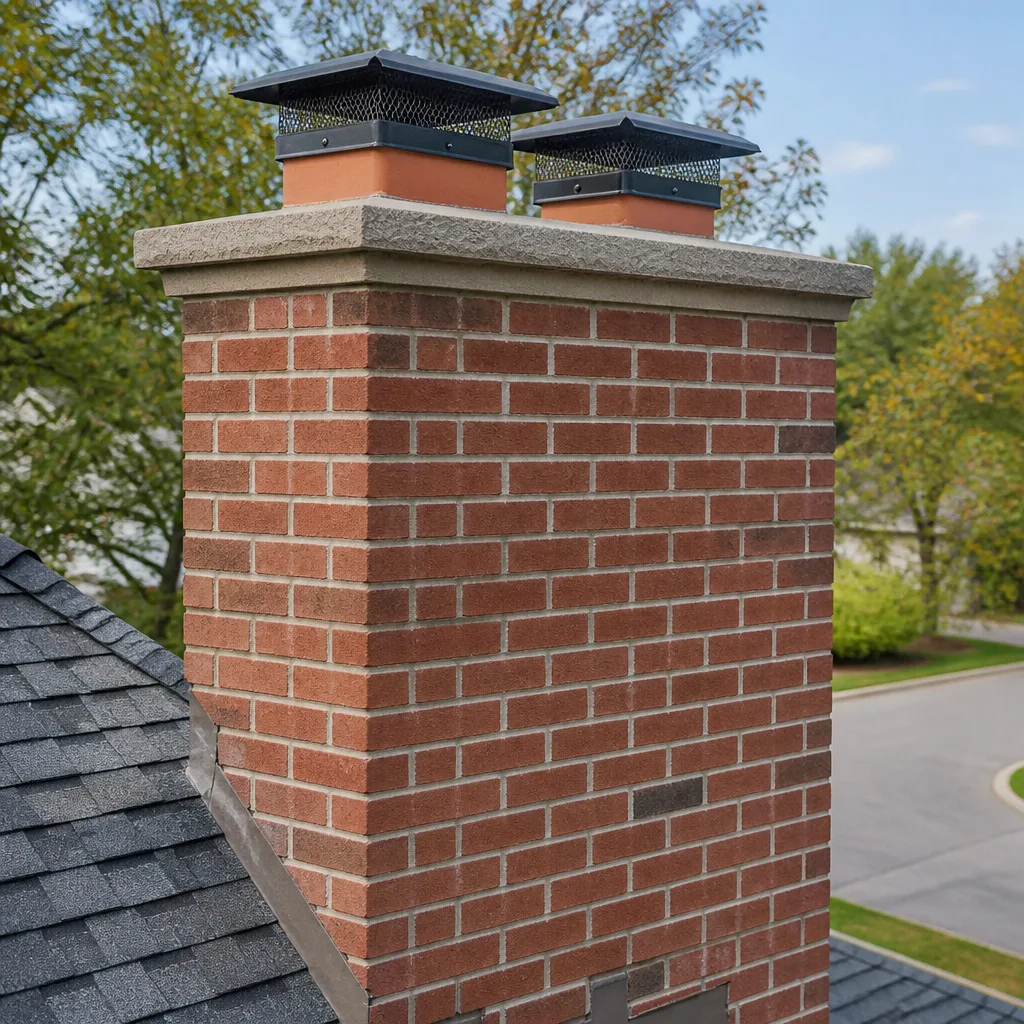
Level 1 sweep and inspection to the NFPA 211 annual standard - flue, crown, cap, and flashing checked and photographed
Chimney sweep logs do not sweep chimneys. They loosen some creosote - which then falls where a brush and vacuum still have to collect it.



 Before
 After
After Before
 After
After Before
 After
AfterChimney Cleaning Permits, Codes & Inspections in VA: What You Need to Know
Cleaning your chimney never requires a permit. Replacing the liner does. Repointing the crown might. And if a contractor tells you otherwise in either direction without checking the Fredericksburg city code, that’s the first sign he hasn’t pulled a permit in this jurisdiction before. We’ve been sweeping chimneys in Fredericksburg since 1984, and we’ve watched too many homeowners inherit code violations from their own renovation projects, only discovering them when a home inspector flags unpermitted liner work during a sale. This guide maps exactly when permits apply, what Virginia law requires, and how to audit your own home’s permit history before it costs you a closing.
Quick Answer
Routine chimney cleaning and sweeping in Virginia do not require permits under the Virginia Uniform Statewide Building Code. Permits become mandatory when work alters the structure, changes the appliance type, or replaces components like liners, fireboxes, or load-bearing masonry. In Fredericksburg, the city building official enforces these rules, while Spotsylvania County handles unincorporated areas, and the two jurisdictions do not share the same fee schedules or inspection timelines.
Table of Contents
- Cleaning vs. Repair: The Permit Line Under Virginia Code
- Fredericksburg City vs. Spotsylvania County: Where Your Permit Gets Pulled
- What NFPA 211 Requires and What Your Sweep Must Document
- Sweep Inspection vs. Building Inspection: Two Different Meanings of “Passing”
- Unpermitted Chimney Work as a Material Defect in Virginia Real Estate
- How to Audit Your Home’s Chimney Permit History
- Common Mistakes to Avoid
- When to Call a Professional
- Frequently Asked Questions
Cleaning vs. Repair: The Permit Line Under Virginia Code
The Virginia Uniform Statewide Building Code, or VUSBC, draws a bright line between maintenance and modification. Understanding where that line sits saves you from two costly errors: paying permit fees you don’t owe, or skipping permits that expose you to red-tag work and failed home sales.
What never needs a permit:
- Chimney sweeping and cleaning of flue passages
- Removal of creosote, soot, and minor debris
- Basic firebox cleaning and damper lubrication
- Exterior brick washing and cosmetic sealant application that does not penetrate masonry
- Installation of a chimney cap using existing flue tile or crown mounting points
What always needs a permit:
- Liner replacement or relining of any kind
- Firebox rebuild or refractory panel replacement
- Crown reconstruction involving formwork and pour
- Structural masonry repair: repointing more than 25% of a wall, or any rebuild of load-bearing elements
- Installation of a new appliance (stove insert, gas log set with new gas line)
- Any alteration to chimney height or termination clearance
The 25% repointing threshold trips up many Fredericksburg homeowners in historic districts like the ones near Caroline Street and Princess Anne Street. A chimney with spalling brick from decades of freeze-thaw cycles might need more than cosmetic tuckpointing. Once you’re replacing a quarter of the mortar joints, the city treats it as structural repair and requires a permit with engineered drawings.
We’ve seen this exact scenario in the College Heights neighborhood, where a homeowner hired a handyman to “touch up” the mortar. The work progressed past the threshold without anyone checking. When the owner listed the house two years later, the buyer’s inspector noted the scope of repointing and asked for permit documentation. None existed. The sale stalled for six weeks while the owner retroactively pulled a permit, paid double fees, and endured a destructive inspection to verify the work behind the finished brick.
The code reference is VUSBC Section 108.1, which defers to the building official’s judgment for “repair” versus “maintenance.” In practice, Fredericksburg’s building official interprets this conservatively. If the work requires scaffolding, permits are almost always triggered.
Fredericksburg City vs. Spotsylvania County: Where Your Permit Gets Pulled
Virginia’s permit jurisdiction follows municipal boundaries, not convenience. A chimney on Hanover Street falls under Fredericksburg City codes. A chimney three blocks west on Route 3 might sit in Spotsylvania County. The difference matters for fees, inspection timing, and which amendments apply.
Fredericksburg City requirements:
- All chimney permits route through the Department of Planning and Community Development at City Hall on George Street.
- Mechanical permits cover liner replacement and appliance changeouts; building permits cover masonry rebuilds.
- Inspection requests require 48-hour advance scheduling, and the city does not offer same-day or weekend slots.
- Fees scale by project valuation, with a minimum mechanical permit fee that typically runs higher than Spotsylvania’s flat-rate structure for comparable work.
- The city enforces historic district overlay rules for properties in designated zones, requiring additional review for exterior-visible chimney modifications.
Spotsylvania County requirements:
- Permits issue through the County Administrator’s office, with building inspections handled by a third-party provider under contract.
- Flat-rate permit fees for residential chimney work are generally lower than Fredericksburg’s, but the third-party inspector may charge additional fees for re-inspections after failed visits.
- Inspection scheduling operates through an online portal with limited phone support; we’ve found response times slower during peak construction season.
- No historic overlay exists countywide, though individual HOA covenants in developments like Fawn Lake or Lee’s Parke may impose design restrictions.
The practical difference we’ve observed: Fredericksburg’s in-house inspectors know chimneys. They’ve seen the same clay liner failures in 1920s Falmouth-area farmhouses that we have. Spotsylvania’s third-party inspectors rotate through all trades and may lack specific chimney expertise, which can lead to inconsistent calls on code interpretation. We’ve had county inspectors question stainless steel liner installations that city inspectors passed without comment, simply because the county inspector was unfamiliar with DuraFlex and Olympia Chimney listing standards.
Your contractor should know which jurisdiction applies before quoting the job. If they hesitate, that’s a signal they may not plan to pull a permit at all.
What NFPA 211 Requires and What Your Sweep Must Document
The National Fire Protection Association Standard 211, “Chimneys, Fireplaces, Vents, and Solid Fuel-Burning Appliances,” functions as the referenced standard throughout Virginia’s fire and building codes. VUSBC adopts NFPA 211 by reference, and the Virginia Statewide Fire Prevention Code enforces its maintenance provisions. But here’s what most homeowners miss: NFPA 211 governs two separate activities with two separate documentation standards.
Level 1 Inspection (annual maintenance sweep):
This is what most Fredericksburg homeowners receive when they schedule a routine cleaning. NFPA 211 requires the sweep to examine “readily accessible” portions of the chimney exterior, interior, and connecting appliances. The standard mandates documentation of:
- Appliance location and connection type
- Chimney type, height, and clearance to combustibles
- Flue size and material
- Visible creosote accumulation and its classification (Stage 1, 2, or 3)
- Any obstruction or structural defect visible without specialized tools
A Level 1 inspection does not require a camera. Many sweeps, including our team at Hearthstone Chimney Co., use one anyway because Fredericksburg’s older housing stock, particularly in the 22401 zip code, hides liner damage behind bends that a flashlight cannot reach. But NFPA 211 does not mandate it for routine maintenance.
Level 2 Inspection (property transfer, appliance change, or suspected damage):
This is where documentation becomes critical. NFPA 211 requires a Level 2 inspection when a property changes hands, when a new appliance connects to the chimney, or after a chimney fire, earthquake, or other damaging event. The standard mandates:
- Video scanning of all internal flue surfaces
- Attic, crawl space, and exterior examination where accessible
- Clearance measurement to combustibles in concealed spaces
- Written report with findings, recommendations, and photo or video evidence
We’ve performed Level 2 inspections in Fredericksburg’s Chatham Heights and Braehead Woods neighborhoods where previous sweeps conducted only Level 1 examinations during home sales. The buyers moved in, lit their first fire, and discovered a detached clay liner shifting with thermal expansion. NFPA 211 would have caught this with mandatory video scanning. The sellers, meanwhile, faced liability claims because their sweep’s “passing” report documented only what a flashlight could see.
The brands we trust for liner documentation and repair reflect this standard’s rigor. Gelco and Copperfield camera systems produce the resolution we need for NFPA 211-compliant reports, and their hardware integrates with software that timestamps and geotags each image. When a Fredericksburg homeowner needs evidence for an insurance claim or real estate disclosure, this documentation holds up.
One more point: NFPA 211 requires sweeps to recommend cleaning when creosote reaches 1/8 inch accumulation. In our Fredericksburg climate, where humid summers and mild winters create ideal creosote conditions, we see Stage 2 glazing more often than in drier western Virginia counties. A sweep who tells you “it looks fine for another season” without measuring is not following the standard.
Sweep Inspection vs. Building Inspection: Two Different Meanings of “Passing”
This confusion costs homeowners thousands. When a chimney sweep hands you a “passing” inspection report, you have received a professional opinion based on NFPA 211. You have not received a government certification that your chimney meets code. These are different documents with different legal weight, and treating them as interchangeable creates real problems.
What a sweep’s “pass” means:
- The chimney, as observed through the sweep’s inspection level, appears safe for intended use
- No immediate hazards requiring appliance shutdown were identified
- Maintenance recommendations, if any, are advisory rather than mandatory
- The document carries the sweep’s professional liability insurance backing, not government enforcement power
What a building permit inspection means:
- A government employee or designated agent has verified compliance with VUSBC and adopted standards
- The work covered by the permit meets structural, mechanical, and fire-safety minimums
- A certificate of completion or occupancy authorization may issue, creating a public record
- Non-compliance can trigger red-tagging, work stoppage, or mandatory correction at the owner’s expense
We’ve corrected this misunderstanding for Fredericksburg homeowners at least twice a month for four decades. A common scenario: a seller provides the buyer with a sweep’s Level 2 report showing “pass” with recommendations for future liner replacement. The buyer’s lender requires a building permit inspection because the sale involves FHA financing. The city inspector finds the existing liner, installed fifteen years ago without permit, does not meet current clearance requirements. The sweep’s “pass” was correct for operational safety at the time of inspection. The city’s code enforcement is correct that unpermitted work fails current standards.
Both parties are right. Both documents serve different purposes. The homeowner who understands this distinction before listing avoids the surprise.
In Fredericksburg’s competitive real estate market, where homes in the 22405 zip code near Massaponax move quickly, buyers increasingly request permit histories through the city’s online portal. A clean sweep report with no matching permit records raises questions that slow negotiations. We recommend homeowners maintain both: the sweep’s professional assessment for operational safety, and the permit record for legal compliance.
Unpermitted Chimney Work as a Material Defect in Virginia Real Estate
Virginia law requires sellers to disclose “material defects” known to them that affect the property’s value or desirability. Unpermitted structural work qualifies. The Virginia Residential Property Disclosure Act does not explicitly list chimney permits, but case law and standard real estate practice have established that unpermitted modifications to fire-rated assemblies, which chimneys are, constitute material defects when discovered.
The mechanism works like this:
- Buyer makes offer contingent on home inspection and financing approval.
- Home inspector notes recent chimney work, such as new stainless liner or rebuilt crown, and requests permit documentation.
- Seller cannot produce permit because work was done without one, or by a previous owner who skipped the process.
- Buyer’s lender, particularly FHA, VA, or conventional loans with strict appraisal requirements, flags unpermitted work as a condition to close.
- Seller must either retroactively permit (expensive, time-consuming, potentially requiring exposed demolition for inspection), credit buyer for estimated permit costs, or accept price reduction.
We’ve been called into these situations in Fredericksburg’s Ferry Farm area and along River Road, where older homes change hands frequently. The retroactive permit process in Fredericksburg requires the same documentation as original permitting, plus a penalty fee. For liner work, this often means cutting inspection ports into finished walls to verify clearance to combustibles, then repairing the drywall. The total cost typically exceeds the original installation price.
Worse, some work cannot be brought into compliance without full removal. We’ve seen unlined chimneys in historic Fredericksburg properties where the masonry is too deteriorated for liner insertion, yet the previous owner installed a flexible liner anyway, concealing the damage. The city inspector, seeing this for the first time during retroactive permitting, red-tags the installation and requires full rebuild. The seller faces a $15,000 surprise on a $2,000 job that should have been permitted correctly.
The disclosure obligation runs to the seller’s knowledge. If you genuinely did not know your predecessor installed an unpermitted liner, you may have a defense. Proving ignorance is difficult, and Virginia courts have held sellers responsible for defects discoverable through reasonable diligence. Checking permit history before listing is that reasonable diligence.
How to Audit Your Home’s Chimney Permit History
Finding your chimney’s permit record is straightforward and free. Not doing it before a major project or home sale is a gamble we’ve seen too many Fredericksburg homeowners lose.
For Fredericksburg City properties:
- Visit the city’s official website and navigate to the Planning and Community Development section.
- Access the online permit portal, which allows search by property address or parcel number.
- Review all permits issued for “Mechanical,” “Building,” or “Fire” categories. Chimney work may appear under any of these depending on scope.
- Request a printed permit history from the clerk’s office at 715 Princess Anne Street if online records are incomplete. Staff can produce certified copies for real estate disclosure.
- Cross-reference permit descriptions with actual chimney components. A “mechanical permit for fireplace insert” should correspond to visible liner and appliance work.
For Spotsylvania County properties:
- Use the county’s third-party permit portal, accessible through the county website.
- Search by address; note that some older records may predate digital entry and require phone or in-person request.
- Contact the County Administrator’s office at (540) 596-5531 for assistance with pre-2000 records, which may exist only on microfilm.
- Verify that any permit found has a corresponding “final” inspection status. Open permits, where work was started but never inspected, create the same liability as unpermitted work.
What to look for:
- Permit date versus work appearance: a liner that looks five years old with no matching permit is a red flag
- Permit scope versus actual scope: a permit for “cap replacement” does not cover the liner you can see was also replaced
- Final inspection status: any permit without a final is legally incomplete
- Contractor name: verify the permit holder was licensed in Virginia at the time; the Department of Professional and Occupational Regulation maintains an online license lookup
We’ve guided dozens of Fredericksburg homeowners through this audit, particularly in the 22407 zip code where rapid development in the 1990s and 2000s produced inconsistent permitting. For a full breakdown of maintenance tasks and schedules, see our Chimney Cleaning & Sweep Maintenance Checklist for Fredericksburg Homeowners. One homeowner in the Salem Fields area discovered three separate chimney projects by previous owners, none permitted. We documented the current condition with our Level 2 camera inspection, advised on which elements required retroactive permitting versus which could be grandfathered, and helped prioritize corrections before listing.
The audit takes an hour. The peace of mind, to borrow a phrase we don’t use lightly, is worth considerably more.
Common Mistakes to Avoid
- Assuming cleaning and repair share the same permit rules. We’ve met Fredericksburg homeowners who paid permit fees for routine sweeps they didn’t owe, and others who faced sale-blocking violations from unpermitted liner work they assumed was “just maintenance.”
- Hiring a contractor who “handles permits” without showing you the application. In Virginia, the property owner is the permit holder of record, not the contractor. You should receive a copy of the approved permit before work begins, with your name on it.
- Accepting a sweep’s “pass” as proof of code compliance for real estate. The NFPA 211 inspection assesses operational safety. It does not substitute for a building permit inspection, and no sweep’s report overrides a city’s code enforcement authority.
- Ignoring Spotsylvania County’s third-party inspection quirks. County inspectors rotate trades and may lack chimney-specific knowledge, leading to callbacks for issues a city inspector would have clarified. Build extra time into your project schedule.
- Failing to check for open permits before buying. A Fredericksburg home with a 2018 mechanical permit and no final inspection means the previous owner started work and never called for completion. You inherit that liability.
- Assuming historic district rules don’t apply to interior chimney work. Fredericksburg’s historic overlay governs any exterior-visible modification, including chimney height changes or cap styles visible from the street. Interior liner work may still trigger review if it requires exterior penetrations.
- Skipping the permit to save money on “minor” liner replacement. The savings evaporate when the unpermitted work surfaces during sale, typically at 3-5x the original permit cost in penalties, legal fees, and delayed closing.
When to Call a Professional
Call a sweep when your annual inspection is due, when you notice draft problems or unusual odors, or when you’re buying or selling a home in Fredericksburg and need documentation that protects your interests. Call a licensed contractor with permit experience when your project involves liner replacement, firebox repair, crown reconstruction, or any structural masonry work. The two roles overlap but are not identical, and a company that handles both, with documented permit history in your specific jurisdiction, saves you from the handoff errors that create violations.
Hearthstone Chimney Co. offers free estimates in Fredericksburg. We’ve pulled permits in this city and Spotsylvania County for over 42 years, and we document every recommendation with photos you can see and a plain-English verdict. Call (540) 596-5531 to schedule. A live person answers, every hour of every day.
Frequently Asked Questions
No. Routine chimney sweeping, creosote removal, and basic maintenance do not require permits under Virginia code. Permits apply only when work alters structure, replaces liners, or modifies appliances. Call (540) 596-5531 if you’re unsure whether your specific project crosses that line.
Fredericksburg uses valuation-based fees with higher minimums for mechanical permits, while Spotsylvania uses flat-rate structures that are typically lower upfront but may add re-inspection fees. For a standard liner replacement, expect Fredericksburg fees to run roughly 30-50% higher than the county, though exact costs depend on project scope. Contact the respective offices for current fee schedules, or call us for guidance based on your address.
A sweep inspection evaluates operational safety under NFPA 211 and produces a professional report backed by the sweep’s liability insurance. A city building inspection verifies code compliance under VUSBC and creates a government record of legal compliance. The sweep’s “pass” does not satisfy permit requirements, and a city inspector’s approval does not guarantee the chimney is clean or safe to use. You need both for complete protection.
You can, but undisclosed unpermitted work constitutes a material defect under Virginia law if it affects value or desirability. Buyers increasingly request permit histories, and lenders may require permit verification for FHA, VA, or certain conventional loans. The safest path is auditing permits before listing and correcting any gaps. We offer free second opinions on written estimates, including retroactive permit strategies.
Virginia code does not mandate sweeping frequency directly, but NFPA 211, adopted by reference, requires annual inspection and cleaning when creosote reaches 1/8 inch. In Fredericksburg’s humid climate, we find many wood-burning chimneys need annual sweeping, while gas appliances may extend to biennial inspection depending on use. The specific interval depends on fuel type, burn habits, and appliance efficiency, not a calendar alone.
You have several options depending on the work quality and current code compliance. If the installation was done correctly and meets current standards, retroactive permitting may be possible with inspection and penalty fees. If the work fails inspection, correction or removal may be required. We’ve helped Fredericksburg homeowners navigate both paths. The critical step is documenting current conditions with a Level 2 camera inspection before contacting the city, so you know what you’re working with.
Yes. We handle permit applications as part of our repair and replacement services in both Fredericksburg city and Spotsylvania County, and we provide homeowners with approved permit copies before work begins. Our estimates include permit fees where applicable, with no-hassle upfront pricing so the number on the estimate matches the number on the invoice. Call (540) 596-5531 to discuss your project.
The Bottom Line
Virginia’s chimney permit landscape is navigable once you understand the boundary between maintenance and modification. Cleaning never needs a permit. Liner replacement always does. Fredericksburg and Spotsylvania County enforce these rules differently, with different fees, inspectors, and timelines. A sweep’s professional inspection protects your safety; a building permit protects your legal standing. Unpermitted work, discovered during a home sale, transforms a routine transaction into an expensive correction project. The homeowners who avoid these problems share one habit: they check permits before starting work, and they audit history before listing. Explore more guides & resources on our blog. The tools are free, the process takes an hour, and the alternative costs far more than the time invested.
Written by Russell Haines, Owner at Hearthstone Chimney Co., serving Fredericksburg since 2014.